
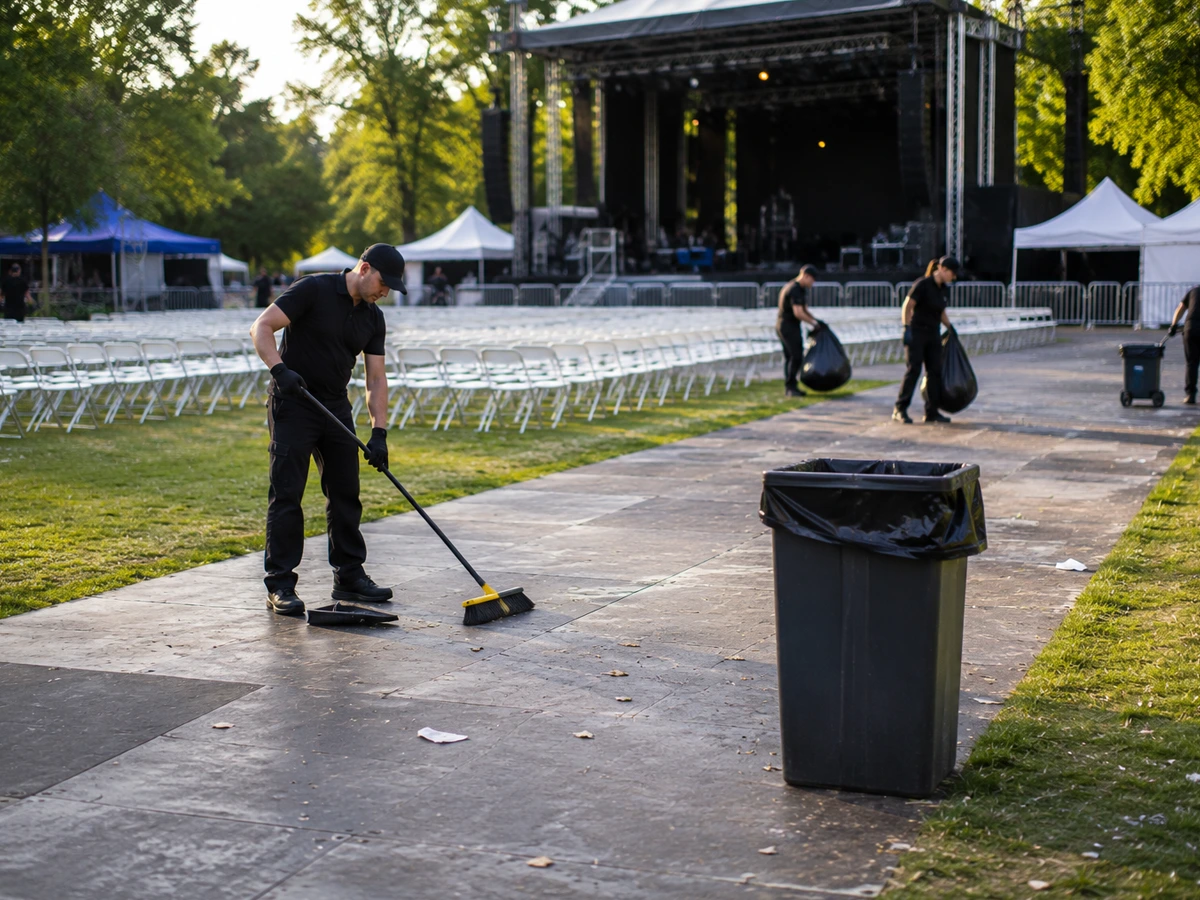
Outdoor event cleaning comes with challenges that rarely come from one big mess. They come from constant movement, open-air conditions, food and drink spillages, changing weather, full bins, muddy walkways, tired guests, and the pressure to keep the site safe while the event is still running.
At FlexCleaning, we treat outdoor event cleaning as live support, not a final tidy-up. The difference matters. A venue can look fine during setup, then become difficult to manage once guests arrive, catering opens, toilets get busy, and waste starts moving through the site.
Why Outdoor Event Cleaning Needs a Different Plan
Indoor cleaning is usually contained. Outdoor events spread the work across entrances, hospitality areas, toilets, backstage zones, food stalls, seating areas, paths, loading bays, and the surrounding public-facing spaces.
That creates a simple problem: mess does not stay where it started.
A dropped drink can become a slip risk on a temporary walkway. Overflowing bins can attract complaints before anyone notices the bin area itself. Mud near an entrance can quickly travel into marquees, portable toilets, flooring, and nearby buildings. Even a small outdoor event can produce cleaning issues that move faster than a static cleaning rota.
Good event cleaning starts by mapping the pressure points. We look at where people enter, where they queue, where food and drinks are served, where waste will build up, and where staff can safely move without disrupting guests. That planning helps us place cleaning teams where they are useful, rather than sending people around the site reacting to problems too late.
If you are planning a busy public or private event, our outdoor event cleaning service is built around that live-event reality.
Waste Builds Up Faster Than Most Organisers Expect
Waste is one of the biggest cleaning challenges because it changes by the hour. Early in the day, the site might only need light litter picking. Once food, drinks, packaging, wristbands, cups, and disposable items start moving through the event, bins can fill quickly.
The Health and Safety Executive’s event guidance includes practical points on handling waste safely, which is a useful reminder that event waste is not only about appearance. It affects hygiene, access, manual handling, pests, public routes, and the working conditions for the people clearing it.
The mistake we see is treating waste removal as an end-of-event task. By then, bins may already be overflowing, litter may have spread, and cleaning staff may be left working around a tired crowd. A better approach is to build waste checks into the event schedule.
That usually means:
- checking high-use bin points before they visibly overflow
- separating waste routes from guest routes where possible
- keeping food and drink areas under closer watch
- clearing loose litter before wind spreads it
- agreeing where full bags will be stored before collection
This is not glamorous work, but it is where many outdoor events either stay calm or start to feel neglected.
Weather Can Turn Small Cleaning Issues Into Safety Problems
Weather changes the cleaning plan quickly. Rain turns grass routes into muddy paths. Wind moves litter, cups, napkins, signage scraps, and loose packaging into places no one expected. Hot weather can make food waste, toilet areas, and bin stores harder to manage.
For mass gatherings, GOV.UK advises event planners to factor heat into operational planning, including welfare and site conditions. That kind of hot weather planning also affects cleaning. In warm conditions, waste needs closer attention, water points can become messy, and toilet areas can deteriorate faster.
Rain brings a different set of problems. The first issue is often entrance control. If mud builds near the main route, it spreads into the rest of the site. Temporary flooring helps, but it does not remove the need for cleaning checks around edges, joins, ramps, and covered areas.
Our judgement is simple: outdoor cleaning plans should assume the weather will interrupt the tidy version of the schedule. If it does not, great. If it does, the team is ready.
Toilets, Queues, And Food Areas Need Live Monitoring
Toilets and catering zones usually create the most visible complaints. Guests may not notice a tidy perimeter, but they notice a messy toilet queue or a sticky food service area straight away.
Outdoor toilets need frequent checks because they are high-traffic, enclosed, and often separated from the main venue building. The cleaning task is part hygiene, part guest experience, and part stock control. If soap, tissue, hand sanitiser, or waste bins run low, guests feel the site is poorly managed even if the rest of the event is running well.
Food and drink areas need a different rhythm. Staff have to look for dropped food, spillages, overflowing packaging bins, sticky surfaces, and waste near queues. These areas also need cleaning that works around service, not against it. The team should be visible enough to keep the area presentable, but not so intrusive that guests feel pushed around.
Belfast City Council’s guidance for event litter and waste is useful here because it treats waste as a planning issue rather than a last-minute clean-up. That is the right mindset.
The Public Route Around The Event Matters Too
One of the easiest areas to miss is the edge of the event. Entrances, pavements, car parks, neighbouring frontages, smoking areas, and queue lines can collect litter even when the main event space is well managed.
That matters for reputation. Guests often form their first impression before they reach the main site. Neighbours and passers-by judge the event from the outside. A messy entrance can make the whole operation look careless.
We usually recommend checking the public-facing perimeter at set points during the event, especially after peak arrival, after food service starts, and near the end of the programme. This is also where wind becomes annoying. Loose litter rarely stays inside the neat boundary drawn on a site map.
Keep Britain Tidy’s reporting on the scale of litter problems shows why event organisers should not treat loose litter as a minor detail. Once it spreads, it becomes harder to control and more visible to everyone around the site.
What We Check Before An Outdoor Event Starts
A good pre-event cleaning check is practical. It does not need to be overcomplicated. It does need to be honest about where things are likely to go wrong.
Before an outdoor event starts, we would usually want to understand:
- where guests will enter and leave
- where bins, bag storage, and collection points will sit
- which areas will have food and drink service
- where toilets are located
- what flooring or ground protection is being used
- where cleaning staff can move safely
- who signs off urgent cleaning decisions during the event
That last point is often missed. If a cleaning issue needs quick action, the team should know who can approve changes. Waiting for three different people to agree on moving bins or assigning extra support wastes time.
The HSE’s wider event safety topics are a useful prompt here. Cleaning sits alongside crowd movement, access, welfare, and site management. It should not be bolted on after those decisions have already been made.
The After-Event Clean Is Easier When The Live Clean Works
Post-event cleaning is always part of the job, but it should not be asked to fix everything. If litter, spillages, toilets, and bins have been ignored during the event, the final clean becomes slower, harder, and more expensive to manage.
A live cleaning team makes the after-event clean more controlled. Waste is already moving through the right channels. The worst spillages have been handled. Guest-facing areas have not been allowed to collapse. The final clean can then focus on restoring the site, checking edges, clearing remaining waste, and handing the space back properly.
For events in central London, post-event expectations can be especially tight because organisers often have strict handback windows, shared access routes, or neighbouring businesses nearby. FlexCleaning’s post event cleaning service is designed for that kind of controlled site reset after guests leave.
This is where experience shows. Outdoor cleaning is full of small judgement calls: when to clear an area, when to wait, when to move a bin, when to report a risk, and when to send more support to one pressure point instead of spreading the team too thin.
Suggest read: Why Professional Cleaning Before and After Events Is Essential for Your London Venue
Why Choose FlexCleaning
FlexCleaning is built for commercial cleaning work that needs clear planning, reliable communication, and a team that can adapt while the job is live. For outdoor events, that means we do more than arrive at the end with bin bags and mops. We look at the site layout, guest movement, waste points, toilets, weather risks, and handback expectations so the cleaning plan fits the event instead of interrupting it.
We are a London-based team with experience supporting offices, venues, hospitality spaces, retail environments, and event sites. Our cleaners work discreetly around guests, staff, suppliers, and organisers, keeping high-use areas presentable without getting in the way of the event itself.
We also support outdoor event cleaning across key London areas, including Farringdon, Clerkenwell, Shoreditch, Southwark, and Westminster.
For added reassurance, our event cleaning teams can work with insured service delivery, COSHH-aware cleaning practices, RAMS where required, uniformed staff, and clear site communication. That gives organisers a more dependable cleaning presence on the day, especially when guests, suppliers, venue teams, and the public are all moving through the same space.
Choose FlexCleaning if you want:
- live cleaning support before, during, and after the event
- practical waste and litter management across busy areas
- toilet, entrance, catering, and public-route checks
- flexible cleaning teams for changing weather or footfall
- a professional handback clean once the event finishes
If the site needs to stay safe, clean, and ready for what happens next, our team can help you keep control from setup to final clearance.
FAQ
What makes outdoor event cleaning more difficult than indoor event cleaning?
Outdoor event cleaning has more variables. Weather, ground conditions, public routes, wind-blown litter, temporary toilets, and wider site boundaries all make the job less contained than indoor cleaning.
When should cleaning staff be on site for an outdoor event?
Cleaning staff should usually be involved before guests arrive, during the event, and after the event finishes. The exact timing depends on the size of the site, expected footfall, catering setup, toilets, and the organiser’s handback requirements.
How do you stop bins overflowing at outdoor events?
The best approach is to place bins around real guest behaviour, then check them before they visibly overflow. Food areas, entrances, bars, seating zones, and queue points normally need closer monitoring than quieter parts of the site.
Do outdoor events need a separate waste plan?
Yes, most outdoor events benefit from a separate waste plan. It should cover bin placement, bag storage, collection routes, recycling expectations, staff access, and what happens if weather or footfall changes the original plan.
Can FlexCleaning provide cleaning before, during, and after an outdoor event?
Yes. FlexCleaning can support outdoor events before guests arrive, while the event is live, and after the site closes. This helps keep high-use areas presentable during the event and makes the final handback clean more controlled.
What information do you need to quote for outdoor event cleaning?
Useful details include the event location, date, expected guest numbers, site layout, opening hours, toilet setup, catering areas, waste arrangements, and whether cleaning support is needed before, during, after, or across the full event.
Can you support busy outdoor events in London?
Yes. FlexCleaning supports outdoor event cleaning across London, including busy commercial, hospitality, venue, and public-facing spaces where entrances, toilets, food areas, and public routes need regular attention.
Outdoor events are easier to enjoy when cleaning is handled before guests notice the problem. The work is part planning, part quick response, and part knowing which areas will cause trouble before they do.
Need Help With Outdoor Event Cleaning?
If you are planning an outdoor event and want the site to stay clean, safe, and presentable from setup to handback, it is worth arranging cleaning support early.
At FlexCleaning, we help with outdoor event cleaning for busy commercial and public-facing spaces. We can plan cleaning around your site layout, guest flow, waste points, toilets, and high-use areas, then support the event while it is live.
To talk through your event cleaning needs, call 020 7415 7008, email info@flexcleaning.co.uk, or learn more about our outdoor event cleaning service.