
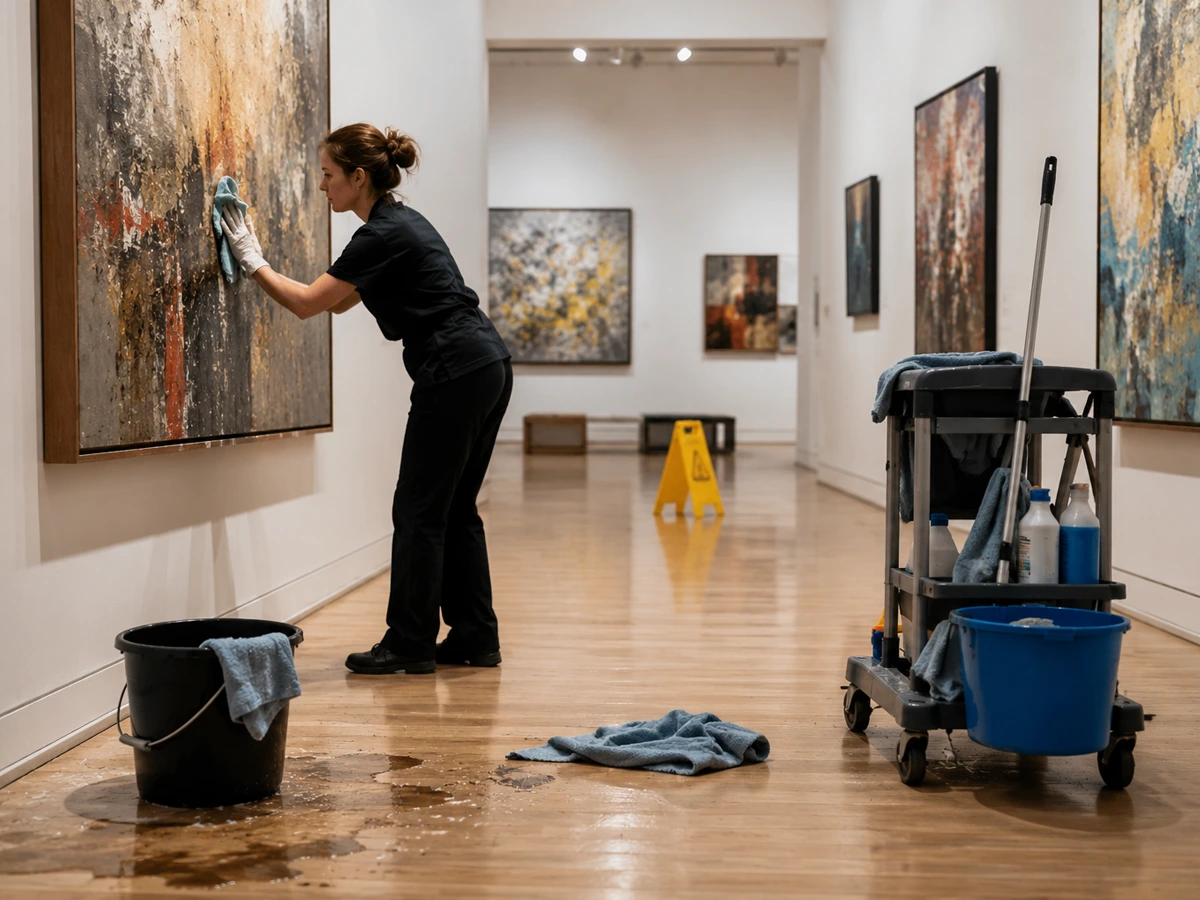
Gallery cleaning mistakes can quietly wreck a space that is supposed to feel calm, intentional, and premium. We see it all the time: the gallery looks “fine” at a glance, but under the right light you get haze on the glass, smears on plinths, lint on dark flooring, and a lingering smell that makes the room feel tired.
The awkward part is that many of these issues come from well‑meaning routines. A general office clean done quickly, the wrong cloth, a product that is perfect for a shop floor but risky near artwork. The goal is not “more cleaning”. It is controlled cleaning, with a method that protects finishes, protects displays, and keeps the space visitor‑ready without introducing new problems.
The Mistake Is Treating A Gallery Like Any Other Commercial Space
A gallery is still a workplace, but it is also a public-facing environment where people scrutinise surfaces up close. Cleaners work around fragile items, reflective materials, and lighting that makes tiny defects obvious.
We approach gallery cleaning differently because:
- finishes are often high‑sensitivity (painted walls, polished concrete, timber, brushed metal, acrylic),
- visitor flow is unpredictable (openings, private views, weekend peaks),
- and dust control is part of the “brand experience”, not just hygiene.
If you are already booking professional cleaning, it is worth checking whether the scope is built around the reality of the space, not a generic checklist.
Mistake 1: Using The Wrong Cloths (Or Reusing Them Too Long)
Microfibre is not “one thing”. We regularly see:
- cloths that shed lint on dark plinths and velvet seating,
- cloths that have picked up grit and are now effectively a gentle sandpaper,
- and cloths that have absorbed fragrance or chemical residue, which then transfers onto display cases.
What we do instead is simple but disciplined: separate cloth types for glass, high‑gloss surfaces, and general wipe-downs, with a strict changeover so residue does not chase you around the room. The difference shows most on spotlighted glass and acrylic, where streaks catch the eye.
Mistake 2: Spraying Product Directly Onto Display Glass Or Labels
Spraying straight onto a surface feels efficient, but in galleries it is a common cause of:
- overspray settling on frames, mounts, and interpretive labels,
- liquid creeping into corners and edges,
- and “mystery smears” that appear a day later when the room warms up.
A controlled method is safer: apply to the cloth first, then wipe, then buff. This reduces airborne mist and keeps moisture away from seams, edging, and adhesives.
This “product to cloth, not to surface” approach is also recommended in exhibit-case housekeeping guidance, because it helps avoid drips and uncontrolled spray near sensitive items.
Mistake 3: Polishing Everything Until It Looks “Shiny”
“Shiny” is not always clean. Over‑polishing can create a film that actually attracts dust and fingerprints faster, especially on stainless steel, black lacquer, and acrylic.
In high‑touch zones (door plates, railings, counters), you want a finish that is clean and neutral, not coated. It is also one of the reasons we plan periodic deep detailing alongside routine cleans, rather than trying to force a showroom finish every single day.
If you want to see how presentation standards influence customer perception in similar environments, our article on showroom cleaning provides useful insights.
Mistake 4: Forgetting That Floors Are Part Of The Exhibition
Floors do more than take footfall. They throw light, reflect silhouettes, and carry dust back into the room.
The common errors:
- dry sweeping that lifts dust into the air (and back onto artwork and glass),
- the wrong vacuum head marking timber or leaving lines on polished concrete,
- using too much water on natural materials, causing dulling, lifting, or patchiness.
A better floor routine depends on the finish, but the principle is the same: capture dust, do not redistribute it, and never introduce moisture where it cannot evaporate cleanly.
Mistake 5: Cleaning During The Wrong Window
We see two extremes: cleaning only after closing (rushed, tired) or cleaning right before doors open (everything is damp, smells of product, and the “freshly cleaned” look is actually streaks).
For galleries, timing matters. A calm pre‑open window for final touches, and a quieter mid‑week slot for more intrusive work, usually beats trying to do everything at the same intensity every day. Around exhibitions, you also need a plan for install and de‑install periods, because dust spikes when walls move, crates open, and people are in and out.
Mistake 6: Ignoring The “Invisible” Hygiene Points Visitors Notice
Visitors do not always comment on hygiene, but they feel it. The points that regularly get missed:
- door handles, push plates, and handrails,
- seating arms and bench edges,
- the underside of reception counters,
- and the edges of touchscreens or card machines.
These are also the areas that pick up skin oils, then smear onto glass or painted surfaces when wiped casually. A targeted touch-point routine prevents the “everything looks slightly grubby” effect that can undermine an otherwise brilliant exhibition.
For healthcare-adjacent or clinical settings, hygiene standards are stricter, but the discipline transfers well. If you manage a medical gallery space, clinic, or wellness venue, our medical cleaning services help maintain high hygiene standards in sensitive environments while minimising chemical residue and surface damage.
If your space has any shared clinical areas, it is also worth exploring our guide to GP surgery cleaning, which explains why a clean-looking environment can still overlook important hygiene risks.
Mistake 7: Not Having A Plan For Events, Openings, And High-Footfall Nights
Openings change the cleaning problem. You get:
- more fingerprints on glass,
- drink spills,
- heavier toilet use,
- and higher airborne dust as doors open continuously.
The mistake is assuming the “standard clean” will stretch. What works better is a planned event clean: a pre‑event detail (so the space looks sharp under lighting and photography), and a post‑event reset that focuses on floors, washrooms, and the high‑touch trail people naturally leave behind.
If your programme includes corporate receptions or public events, it can also help to align with our event cleaning services, which are designed to support exhibitions, launches, and high-footfall events without disrupting operations.
Mistake 8: Treating Smell As A Sign Of Cleanliness
Strong fragrance can backfire in galleries. It competes with the calm atmosphere, and some visitors are sensitive to it. It can also “cling” to soft furnishings and curtains, making the space feel artificial rather than fresh.
We aim for neutral. Clean should smell like nothing, not like a product aisle. Ventilation, controlled product choice, and removing the source of odours (bins, washrooms, damp mops) does more than perfume.
Mistake 9: Relying On A Checklist Instead Of A Standard
A checklist is useful. A standard is better.
A good gallery cleaning standard is:
- visual (what does “clean” actually look like under gallery lighting?),
- repeatable (the method works across staff changes),
- and safe (products, cloths, and equipment do not damage finishes).
When we take on a gallery or creative space, we prefer to agree on the standard first, then build the routine around it. Otherwise you end up “ticking” tasks while the space still looks slightly off.
This is the same logic we apply in other specialist environments. For example, high-traffic retail and showroom spaces can look busy even when they are hygienic. If that sounds familiar, our article on retail cleaning standards explains how cleanliness can influence customer perception and spending.
A Practical Way To Reduce Mistakes Without Overcomplicating The Clean
If you want one simple change that improves results quickly, it is this: separate “detail cleaning” from “routine cleaning”.
Routine cleaning keeps the space operational (floors, bins, washrooms, touch points). Detail cleaning protects the brand (glass, plinths, spotlit surfaces, edges, corners, and the places cameras catch). When everything is treated as routine, you either rush the detail or waste time doing deep work every day and still miss the essentials.
From our work, the galleries that stay consistently visitor‑ready are not the ones that clean “hardest”. They are the ones that clean with control.
Why Choose FlexCleaning For Gallery Cleaning?
Galleries require a higher standard of cleaning than most commercial environments. Our team understands the challenges of maintaining display areas, visitor spaces, glass surfaces, exhibition rooms, and high-profile event venues without disrupting daily operations.
We provide specialist cleaning services for galleries, exhibition spaces, showrooms, museums, healthcare facilities, and commercial properties across London. Every cleaning schedule is tailored to the space, visitor levels, and presentation standards required.
FAQ
How Often Should A Gallery Be Professionally Cleaned?
Most galleries benefit from a routine clean on a consistent schedule, with a separate detail clean planned weekly or fortnightly depending on footfall. If you run openings or events, it is worth adding a pre‑event and post‑event clean rather than trying to stretch a standard visit.
What Cleaning Products Are Safe Around Artwork And Display Materials?
There is no single “safe” product for every surface, which is why method and restraint matter. Avoid heavy fragrance and aggressive sprays, and use controlled application (product to cloth, not to surface) to reduce overspray and residue.
If you have heritage items on display or in storage, many collections-care organisations advise avoiding uncontrolled sprays and being cautious with disinfecting solutions near sensitive materials.
Why Do Display Glass And Acrylic Get Streaky So Quickly?
Streaking usually comes from residue, the wrong cloth, or cleaning too close to opening time when the room is warming up and drying unevenly. A two‑step approach (wipe, then buff) with separate cloths for glass and general surfaces reduces the problem dramatically.
Can Poor Cleaning Affect Visitor Perception And Sales?
Yes, especially in premium spaces. Even without “dirt”, haze on glass, smudged plinths, and dusty edges signal neglect, and visitors pick it up subconsciously. This is the same effect we see in retail and showroom environments where presentation influences how people value what they are seeing.
How Do You Clean A Gallery Without Disrupting Visitors Or Staff?
Timing and zoning are key. We plan quieter windows for disruptive tasks (floor work, washroom deep cleans) and use a lighter “keep-it-sharp” routine for pre‑open touch-ups, so the space stays presentable without feeling like a worksite.
Before you decide what to change, it helps to walk the space the way a visitor would, then fix the moments where the illusion breaks.
Speak To Us About Gallery Cleaning
FlexCleaning provides specialist gallery cleaning services for galleries, museums, exhibition spaces, showrooms, and creative venues throughout London. We support clients across Clerkenwell, Kings Cross, Farringdon, Holborn, Islington, Shoreditch, Camden, and surrounding London areas.
To discuss your requirements or request a tailored quotation, call +44 (0) 20 7415 7008 or email info@flexcleaning.co.uk. Our team will help create a cleaning schedule that keeps your gallery presentation-ready while protecting sensitive surfaces and display areas.