
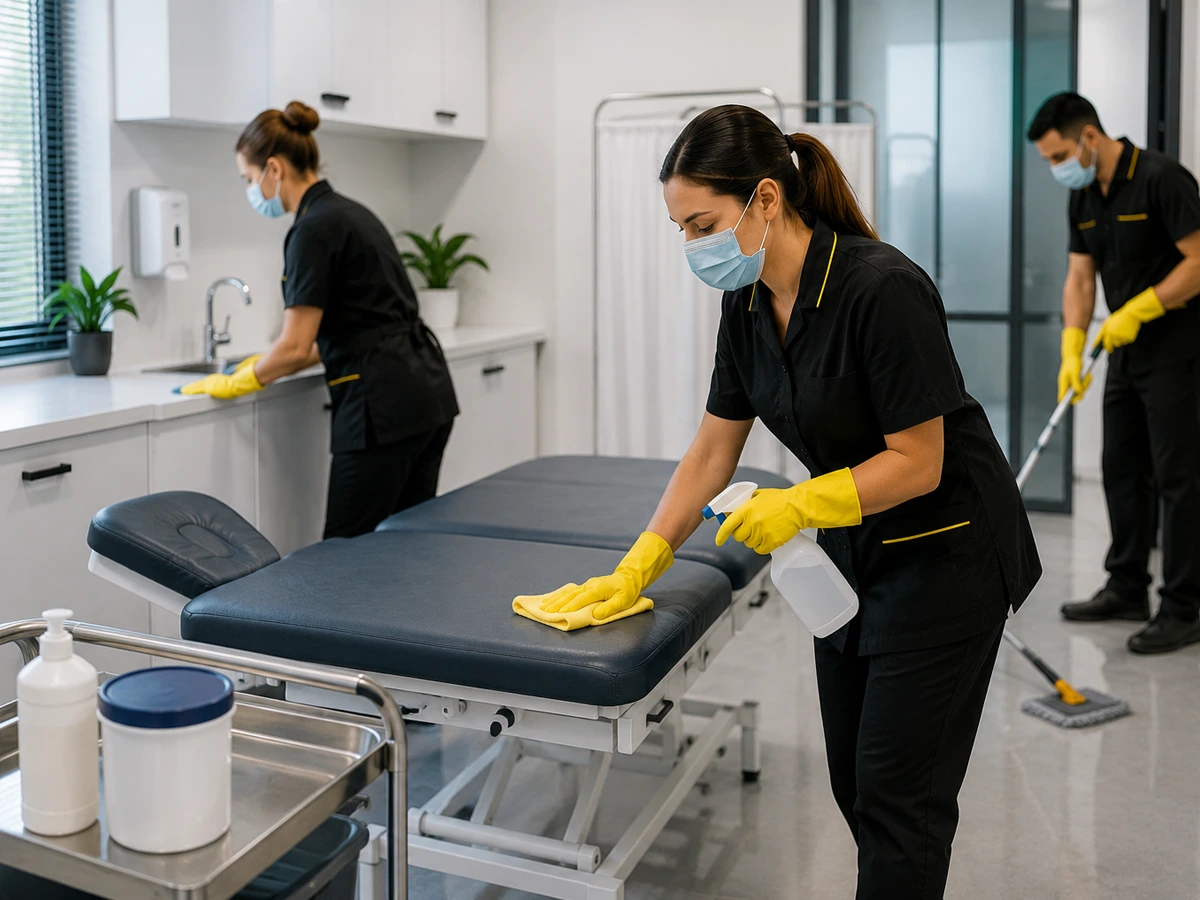
Infection prevention is a fundamental requirement in modern healthcare. For medical clinics, maintaining a clean and hygienic environment is not merely about appearance; it is essential to patient safety, regulatory compliance, and operational efficiency.
From GP surgeries and specialist treatment centres to private healthcare practices, medical clinics experience a constant flow of patients, visitors, and staff throughout the day. Every door handle, reception desk, waiting room chair, and treatment surface presents an opportunity for the spread of harmful pathogens.
The latest data from the UK Health Security Agency (UKHSA) highlights the importance of robust infection prevention measures. In its 2023 national survey, published in 2025, healthcare-associated infections (HCAIs) were identified in 7.6% of patients across healthcare settings in England, representing an increase from previous figures. This rise reflects growing pressures on healthcare services and reinforces the need for effective infection control practices across all care environments.
While hand hygiene, personal protective equipment, and clinical protocols remain essential, medical clinic cleaning services play a significant role in reducing infection risks within healthcare environments.
Why Infection Prevention Matters in Medical Clinics
Medical clinics differ from standard commercial environments because they bring together individuals with varying health conditions, including those who may be more vulnerable to infection.
Unlike office spaces, healthcare settings regularly encounter:
- Higher volumes of touchpoints
- Increased exposure to bacteria and viruses
- Patients with weakened immune systems
- Clinical waste and bodily fluids
- Shared equipment and treatment areas
It is also helpful to distinguish between cleaning and disinfection. Cleaning removes visible dirt and reduces the number of germs on a surface, while disinfection uses approved products to kill or inactivate harmful microorganisms.
Even seemingly low-risk spaces, such as reception areas and waiting rooms, can contribute to the transmission of infectious diseases if cleaning standards are inconsistent.
Effective infection prevention protects:
- Patients
- Clinical staff
- Administrative teams
- Visitors and carers
- The wider community
It also supports continuity of care by reducing avoidable disruptions caused by outbreaks or staff illness.
Understanding Healthcare-Associated Infections
Healthcare-associated infections are infections acquired while receiving treatment or care within a healthcare setting.
Common examples include:
- Respiratory infections
- Gastrointestinal infections
- Skin infections
- Bloodstream infections
- Antibiotic-resistant infections
Although hospitals often receive the greatest attention, medical clinics and community healthcare settings face many of the same infection risks.
According to NHS England’s National Infection Prevention and Control Manual (NIPCM), standard infection control precautions should be applied consistently across all healthcare settings and for every patient interaction, regardless of whether infection is suspected.
This means infection prevention cannot be treated as an occasional deep clean or a reactive measure. It requires a structured, ongoing approach.
The Hidden Risks Within Medical Clinics
Many of the highest-risk surfaces in a clinic are often overlooked because they are used so frequently.
These include:
- Reception counters
- Touchscreen check-in systems
- Door handles
- Light switches
- Waiting room seating
- Consultation room furniture
- Medical equipment surfaces
- Staff kitchens and break rooms
- Toilet facilities
Research consistently shows that pathogens can survive on hard surfaces for extended periods, increasing the risk of cross-contamination.
One uncleaned touchpoint may affect dozens of people throughout the day. While that may sound alarming, the good news is that effective cleaning protocols significantly reduce these risks.
The Role of Professional Cleaning Teams in Infection Prevention
Professional cleaning teams do far more than empty bins and vacuum floors.
In medical clinics, specialist cleaning operatives contribute directly to infection prevention by following evidence-based cleaning procedures designed for healthcare environments.
Risk-Based Cleaning Programmes
Not every area within a medical clinic requires the same level of cleaning.
Professional healthcare cleaning teams assess each area according to factors such as:
- Patient footfall
- Clinical activities undertaken
- Vulnerability of occupants
- Frequency of contact with surfaces
This allows cleaning schedules to be tailored to specific risks rather than relying on generic routines.
For example, treatment rooms may require more frequent cleaning and disinfection than administrative offices.
Enhanced Cleaning and Disinfection
Healthcare cleaning involves more than removing visible dirt.
Healthcare cleaning specialists use appropriate cleaning agents and disinfectants to reduce microbial contamination on high-touch surfaces and shared spaces.
This process typically includes:
- Cleaning before disinfection
- Following the recommended contact times for disinfectants
- Using colour-coded equipment to minimise cross-contamination
- Adhering to safe chemical handling procedures
Proper disinfection is only effective when applied correctly. Using the wrong products, incorrect dilution rates, or inadequate contact times can reduce effectiveness.
Focus on High-Touch Surfaces
High-touch surfaces require particular attention because they represent the greatest opportunity for pathogen transmission.
Dedicated cleaning teams develop detailed schedules that prioritise these areas throughout the day.
Examples include:
- Door handles
- Telephones
- Keyboards
- Check-in screens
- Armrests
- Taps
- Flush handles
When cleaning teams understand how clinics operate, they can schedule interventions during quieter periods to minimise disruption while maintaining high hygiene standards.
Supporting Standard Infection Control Precautions
The National Infection Prevention and Control Manual outlines standard infection control precautions that apply to all healthcare settings. These include environmental cleanliness, hand hygiene, safe waste management, and appropriate use of personal protective equipment.
Professional cleaning teams support these measures by ensuring that the environment itself does not become a source of infection.
Compliance and Healthcare Cleaning Standards
Medical clinics operate within a highly regulated environment.
In 2025, NHS England introduced updated National Standards of Healthcare Cleanliness, which apply across healthcare settings and provide a structured framework for cleaning activities. The standards focus on effective cleaning processes, risk assessment, transparency, and measurable outcomes.
Although independent clinics may not be directly governed by NHS requirements, these standards provide a valuable benchmark for infection prevention.
Experienced healthcare cleaning providers help clinics maintain compliance through:
- Documented cleaning schedules
- Risk assessments
- Auditable processes
- Staff training records
- Clear responsibilities and accountability
Cleaning teams trained in Control of Substances Hazardous to Health (COSHH) regulations also ensure that chemicals are handled safely and appropriately.
Why Specialist Healthcare Cleaning Is Different from General Commercial Cleaning
There is a significant difference between cleaning a standard office and cleaning a medical clinic.
Healthcare environments require:
- Greater attention to infection risks
- Specialist training
- Enhanced disinfection procedures
- Knowledge of healthcare regulations
- Understanding of patient confidentiality
- Flexible out-of-hours working
Healthcare cleaning specialists understand the operational demands of healthcare environments and adapt their services accordingly.
After all, patients rarely book appointments around cleaning schedules.
Choosing a Professional Cleaning Partner for Your Medical Clinic
When selecting a cleaning provider, medical clinics should look beyond cost alone.
Consider whether the provider offers:
- Experience within healthcare settings
- Tailored cleaning programmes
- COSHH-trained operatives
- Flexible cleaning schedules
- Robust quality assurance processes
- Documented cleaning procedures
- Clear communication channels
A trusted cleaning partner should work collaboratively with clinic managers to identify risks and develop a practical infection prevention strategy.
How FlexCleaning’s Medical Clinic Cleaning Services Support Infection Prevention
At FlexCleaning, we understand that every medical clinic has unique operational requirements. We support healthcare providers throughout Central London, delivering specialist medical cleaning services to clinics in Clerkenwell, Farringdon, Holborn, Shoreditch, Old Street, Moorgate, Barbican, Hoxton, and Aldgate.
Our specialist clinical and medical cleaning services are designed to support infection prevention through:
- Bespoke cleaning schedules
- Enhanced disinfection protocols
- Focused cleaning of high-contact surfaces
- COSHH-compliant procedures
- Flexible out-of-hours services
- Professional, fully insured cleaning teams
We work with medical clinics across London to create safe, hygienic environments for patients, visitors, and healthcare professionals.
Whether you operate a GP surgery, private clinic, consultation practice, or specialist treatment centre, our cleaning programmes are tailored to your needs.
Because when it comes to infection prevention, consistency matters just as much as cleanliness.
Suggested read: CQC-Compliant Cleaning Services in London: A Guide for Healthcare Providers
Frequently Asked Questions
What is infection prevention in medical clinics?
Infection prevention refers to the policies, procedures, and practices used to reduce the risk of infections spreading within healthcare environments. This includes environmental cleaning, hand hygiene, waste management, and surface disinfection.
Why is professional cleaning important for medical clinics?
Professional cleaning teams use specialist techniques, products, and procedures designed for healthcare environments. Their work helps reduce cross-contamination and supports compliance with infection control standards.
How often should medical clinics be cleaned?
Cleaning frequency depends on the type of clinic, patient volume, and clinical activities undertaken. High-touch surfaces and treatment areas often require multiple cleaning interventions throughout the day.
What are healthcare-associated infections?
Healthcare-associated infections are infections acquired during the course of receiving medical care. They can affect patients, staff, and visitors and may occur in hospitals, clinics, and community healthcare settings.
What are high-touch surfaces in medical clinics?
High-touch surfaces include door handles, reception desks, waiting room chairs, check-in screens, taps, keyboards, and treatment equipment. These surfaces require regular cleaning and disinfection.
Are private clinics expected to follow NHS cleaning standards?
While independent clinics may operate under different arrangements, NHS England’s National Standards of Healthcare Cleanliness provide a recognised benchmark for effective infection prevention and environmental hygiene.
Prioritise Infection Prevention with Professional Medical Cleaning
Effective infection prevention depends on more than individual hygiene practices. Clean, well-maintained environments support safer care, improve patient confidence, and help reduce the risk of healthcare-associated infections.
Professional cleaning teams provide the expertise, consistency, and accountability needed to maintain high standards within medical clinics.
If you are reviewing your clinic’s current cleaning arrangements or would like to strengthen your infection prevention strategy, FlexCleaning can help.
Contact FlexCleaning today to discuss tailored medical clinic cleaning services designed to support your infection prevention strategy. Our family-run team has been supporting businesses across Central London since 2009 with flexible, professional cleaning services designed around each client’s requirements.
To arrange a consultation or request a personalised quotation, call FlexCleaning on +44 (0) 20 7415 7008 or email info@flexcleaning.co.uk.