
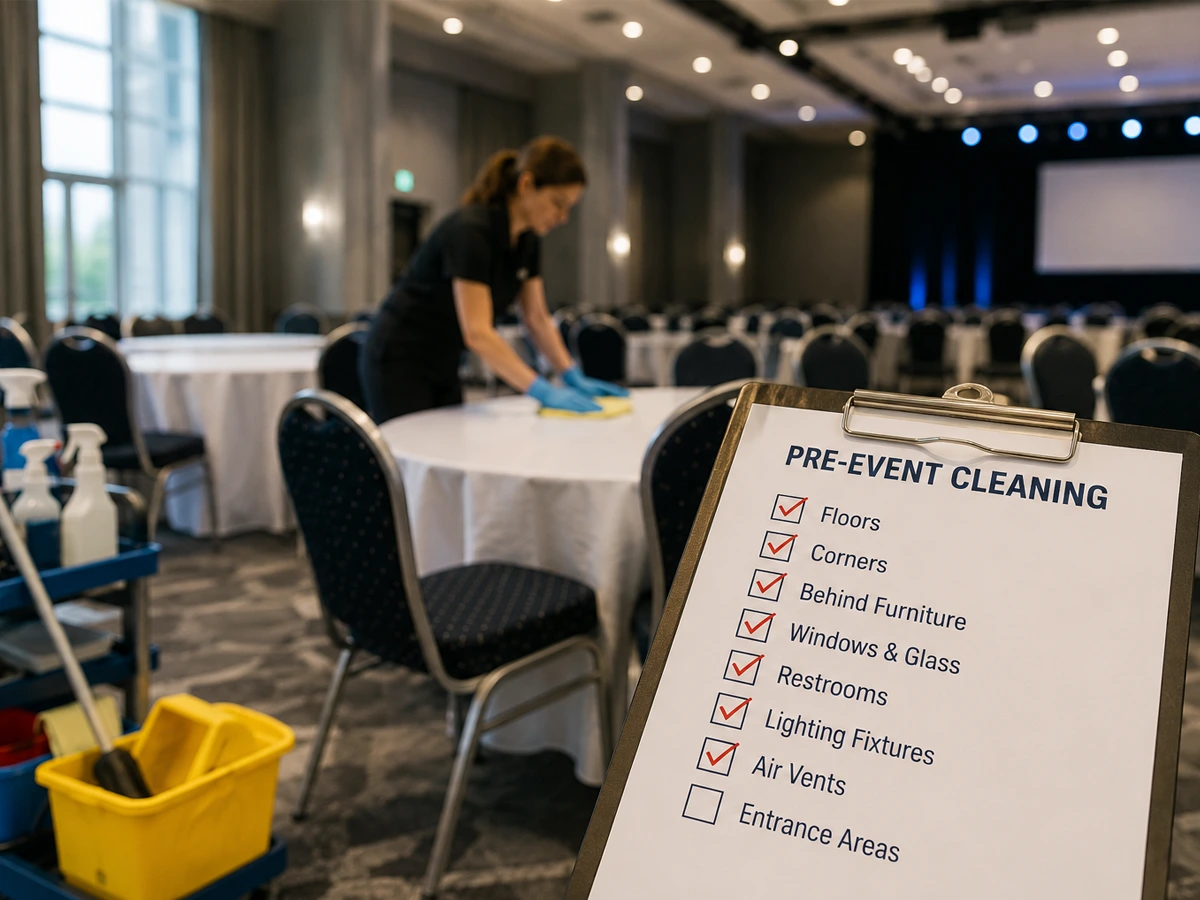
Pre-event cleaning prepares a venue for the way guests and staff will use it, not simply for how it looks when empty. Clean entrances, dry floors, ready-to-use toilets and an organised cloakroom all help create a welcoming arrival and avoid last-minute disruption.
What venues overlook is often less obvious than a dirty floor: cloakroom counters, shared touchpoints, staff routes and details revealed by event lighting. These areas deserve attention before guests arrive together and queues begin to form.
We regularly support venues across London, helping them prepare for conferences, exhibitions, corporate functions and private events with practical event cleaning in London and venue cleaning support.
The First Touchpoints Guests Notice
Guests begin judging the venue at the entrance, reception desk and cloakroom, before they reach the main event space.
Start by mapping “first touchpoints”: the things guests physically interact with as they arrive. In busy commercial spaces, the most-used areas need consistent attention, even when the main room still looks tidy:
- Entrance doors, push plates, handles, and reception counters
- Cloakroom rails, hangers, and ticket scanners
- Lift buttons and stair rails
- Bar surfaces, card machines, menus, and fridge handles
- Toilet door locks, cubicle latches, flush buttons, taps, and hand dryers
A venue can have a spotless floor and still feel grubby if handles, counters and rails are greasy, dusty or streaked with fingerprints. Include these touchpoints in the final presentation clean, rather than assuming the main floor clean covers them.
If your London event has a check-in, a drinks reception, or any kind of queue, this matters even more. Queues are where guests stand still and start noticing details.
Preparing Cloakrooms for Smoother Guest Arrivals
Cloakrooms can become a bottleneck when guests arrive together, particularly if the counter is cluttered, the floor is wet or staff cannot reach the storage area easily. Cleaning alone will not solve a queue caused by insufficient staffing or a slow ticketing system, but preparing the space helps remove avoidable obstacles.
Before doors open, coordinate the cleaning team and cloakroom staff so the area is clean, dry and ready for use:
- Clear and clean the counter: remove old tickets, rubbish and sticky residue, leaving an agreed space for ticketing equipment and guests’ belongings.
- Prepare rails and storage: clean hangers, rails and shelving, then let cloakroom staff organise them to suit their collection and return process.
- Check floors and mats: remove debris, secure entrance mats and allow cleaned surfaces to dry before a queue forms.
- Keep routes clear: remove cleaning equipment, waste bags and supplier packaging from the queue area and staff access routes. Keep exits and accessible routes unobstructed, and check the layout against the venue’s arrangements for safe venue circulation routes.
- Agree spill response: identify who will deal with wet coats, dropped drinks or tracked-in rainwater, and keep supplies nearby without placing them in guest walkways.
The event team should also check that signage, queue layout and staffing suit the expected arrival peak. If space allows, separate drop-off and collection points can help prevent crossing queues, but the layout should follow the venue’s access and safety arrangements.
For busy events, schedule discreet checks between arrival waves. Empty bins and deal with spills without closing the whole counter or cleaning across an active queue.
Why Venue Cleaning Timing Matters Before Set-Up
A detailed clean can be undone when furniture, equipment and decorations arrive afterwards. Moving chairs, rolling cases and unpacking displays can leave fresh dust, marks and packaging behind.
Allow for two stages rather than expecting one clean to cover both:
- Do the heavy reset before set-up (dust, high-level areas, detailed washroom work, sticky residue removal).
- Do a focused “presentation clean” after set-up (glass, touchpoints, seating, bins, entrances and cloakroom counters).
This is why pre-event cleaning in London needs coordination, not just labour. If you’re running a repeat calendar of venue hire, corporate bookings or seasonal events, plan cleaning before and after events around agreed access windows and handover times.
Suggested read: Why Professional Cleaning Before and After Events Is Essential for Your London Venue
Why Back-of-House Cleaning Matters to Guests
It’s easy to underestimate how quickly issues in back-of-house areas can affect the guest experience.
Back-of-house issues worth checking before an event include:
- Overflowing bins in staff corridors lead to smells near public areas.
- Dusty loading bays track debris into foyers.
- Sticky prep floors increase slip risk for staff, then footprints appear in visible walkways.
- Break rooms and staff toilets get neglected, which affects morale and standards when the pace increases.
A venue that wants consistent standards has to treat back-of-house as part of the service. Cleaning teams should be briefed on how staff move through the building, including waste collection routes and supplier access, rather than simply given a generic checklist. For busy hospitality spaces, this can sit alongside regular restaurant, bar and nightclub cleaning so standards are maintained between events as well as on the day.
How Event Lighting Highlights High-Level Dust
Event lighting is unforgiving. Spotlights, uplighters, and daylight through glass can make dust and cobwebs look dramatic.
High-level areas that are frequently missed:
- Air vents, diffusers, and return grilles
- Ceiling corners, beams, and exposed pipework
- Tops of signage, frames, and wall-mounted fixtures
- Pendant lights and acoustic panels
- Curtain tracks and pelmets
Check overhead areas under the lighting planned for the event. Remove dust before set-up so the cleaning itself does not leave debris on dressed tables, displays or dark surfaces.
Plan high-level dusting before furniture, catering or displays are set out, using suitable access equipment and trained staff. Where the task involves a risk of falling, follow HSE working at height guidance and plan the work before starting. Check lighting and delicate fixtures with the venue team before cleaning them; a last-minute attempt to reach overhead dust can disrupt set-up and create unnecessary risks.
Spills, Stickiness and Smears in the Bar Area
Bar areas can retain sticky residue and splash marks from the previous service, even when the counter initially looks clean.
Typical pre-event bar problems include:
- Sticky residue on bar tops and under-counter shelves
- Smears on glass-fronted fridges
- Dust on bottle displays
- Old splash marks behind taps
- Dried syrup around pumps and nozzles
Empty and clean bottle bins, recycling points and general waste containers before service starts. Residue around bin lids and floors can cause odours or leave staff dealing with spills as guests arrive.
Treat the bar as a separate cleaning zone and agree responsibilities with the catering team, particularly for drink dispensers, food-contact surfaces and equipment. Complete the reset before stock and glassware are arranged for service.
Toilet Preparation Goes Beyond Visible Cleanliness
Toilets can be clean and still make guests uncomfortable. That usually happens when the details that signal hygiene are missing.
Pre-event toilet checks should include:
- Removing limescale marks and water staining where possible
- Drying and polishing taps and mirrors (no streaks)
- Checking cubicle locks, doors, and bins
- Spot-cleaning walls around hand dryers and behind doors
- Checking ventilation and addressing the source of odours rather than masking them
Check soap, toilet paper and hand-drying supplies as well as surface cleanliness. Report faulty locks, leaks or blocked fixtures to the venue team, and agree who will replenish supplies during the event. Separate the pre-opening reset from live washroom checks: a fully stocked toilet at opening still needs monitoring once guest numbers build.
Think about the arrival route too: which toilets will guests reach first, and could a queue block a corridor or cloakroom entrance? Finish cleaning these areas before the arrival peak and plan checks around quieter periods.
Floors, Carpets and Entrance Mats Need Different Care
A rushed mop can make floors look worse. It can also create hazards.
Common floor oversights:
- Unsuitable cleaning products for the floor type (streaks on polished surfaces, residue on vinyl, dulling on stone).
- Ignoring edges and corners, where dirt builds up and photographs badly.
- Not allowing drying time, which increases slip risk just as staff start moving quickly.
- Forgetting entrance mats, which means the first few steps into the venue bring in visible debris. For open-air or partly covered venues, coordinate outdoor event cleaning with entrance checks so litter and tracked-in debris are dealt with along guest arrival routes.
Vacuum carpets along arrival routes, around seating and beneath cloakroom counters, not just the open centre of the room. Assess stains early: spot treatments or deeper carpet cleaning may need drying time that is unavailable immediately before guests arrive.
Match cleaning products and methods to each surface and the manufacturer’s guidance. For chemical products, check the required dilution, handling precautions and any ventilation needs before work starts; stronger is not automatically better. Agree a floor-care plan with the venue so finishes remain consistent from event to event.
Allow enough drying time before guests arrive and restrict access while floors are wet. HSE floor cleaning guidance recommends cleaning during quieter periods or in sections that leave a dry route; warning signs alone do not remove the slip risk.
Suggested read: Cleaning Challenges Unique to Outdoor Event
Professional Event Cleaning and In-House Venue Teams
Many London venues already have in-house teams, but event cleaning often needs a different level of planning, timing, and specialist focus.
In-house teams are usually best placed to manage day-to-day cleaning, routine checks, and quick resets between normal trading periods. Professional event cleaning support is more useful when the venue needs detailed pre-event cleaning, high-level dusting, bar-zone resets, washroom detailing, or coordinated cleaning around suppliers and guest arrival times.
A combined approach can work well: the in-house team provides venue knowledge and routine upkeep, while external cleaners handle agreed preparation and reset tasks. Confirm who covers each area, who replenishes supplies and who responds to spills, so responsibilities do not fall between teams.
If your venue also needs support after guests leave, plan the post-event clean as part of the same schedule so the space is ready for its next booking without a rushed next-day reset.
Corridors, Waiting Areas and Seating Are Part of the Venue
Events are not just the main room. Guests spend time in corridors, stairwells, cloakrooms, and waiting areas.
These spaces are often overlooked during event preparation, which can affect the overall impression of the venue.
In-between areas to prioritise:
- Stair rails and stair nosings
- Lift interiors and mirrors
- Corridor skirting boards (scuffs, dust lines)
- Door frames and light switches
- Waiting benches and side tables
Inspect chairs, armrests and seat backs for dust, crumbs or sticky marks, and use methods appropriate to the upholstery or finish. Check beneath waiting benches and around table bases, where litter can remain after the main floor clean.
Finish glass doors, reception screens and mirrors after suppliers have moved through. These spaces connect the entrance, cloakroom and main room, so a consistent standard helps the whole venue feel ready.
Planning Pre-Event Cleaning and the Final Handover
Build the preparation plan around the venue’s layout, booking schedule and agreed cleaning scope:
- Walkthrough and risk check: identify pinch points (entrances, toilets, bars, staff routes) and any slip, trip, or odour risks.
- Zoning: split the venue into guest-facing, bar/service zones, toilets, back-of-house, and high-level areas.
- Reset clean: detailed clean that removes build-up and restores surfaces.
- Set-up window coordination: agree access times with suppliers and avoid cleaning areas while equipment is being moved through them.
- Presentation clean: finish glass and touchpoints, spot-clean floor marks and check the areas guests will see first.
- Arrival window check: just before doors open, re-check toilets, entrances, cloakrooms and bar areas with the venue team.
Final checks before guests arrive
A short walkthrough after set-up helps catch anything disturbed by suppliers or staff:
- Confirm entrance floors and mats are dry, secure and free of debris.
- Check cloakroom counters are clear and staff and guest routes are unobstructed.
- Replenish toilet supplies and confirm bins are ready for use.
- Remove fresh fingerprints from doors, reception counters and bar surfaces.
- Confirm who will handle spills, waste and cleaning checks during the event.
- Check back-of-house corridors, staff areas and waste points are clean, clear and accessible.
Hand over any maintenance or access concerns to the event manager before opening. An agreed handover lets staff focus on welcoming guests rather than discovering unfinished tasks as the first queue forms.
Why Choose FlexCleaning?
FlexCleaning is a family-run commercial cleaning company based in Farringdon, serving London businesses since 2009. We provide tailored pre-event, during-event and post-event cleaning support, bringing together venue presentation, washroom upkeep, waste removal and the final reset rather than treating each as an isolated task.
For venue teams, the value is a cleaning plan that fits the event: which spaces must be ready first, when suppliers need access, where guests will gather and when the venue must be handed back. Evening, weekend and one-off cleaning options can be discussed around your booking and access arrangements.
Our service combines:
- Relevant COSHH training: staff have training in the Control of Substances Hazardous to Health, supporting appropriate product use across different commercial surfaces and spaces.
- Flexible scheduling: tailored cleaning around preparation, guest arrival, live-event needs and post-event handover.
- Attention to the whole venue: guest-facing areas, bar and catering zones, washrooms and back-of-house routes all belong in the agreed scope.
- Dependable communication: customer reviews frequently highlight reliability, professionalism, friendly communication and thorough cleaning.
- A Central London base: local knowledge of Farringdon and Clerkenwell, with service across the surrounding commercial areas.
For outdoor events in Shoreditch, Westminster and surrounding Central London areas, discuss the entrance checks, litter control and final clean-up your site needs when booking.
FAQs
How can venues reduce cloakroom queues at events?
Queue length depends on staffing, ticketing, storage layout and the arrival peak. Cleaning supports those arrangements by keeping counters usable, floors dry and access routes clear. Before opening, check the cloakroom layout with the event manager; do not use queue space to store cleaning kit or waste bags.
How far in advance should pre-event cleaning be booked?
Book once the event date and access windows are confirmed. Provide the venue layout, expected attendance, surfaces that need attention and any restrictions on access. If deep carpet cleaning or high-level work is needed, allow for the work and drying time before set-up and guest arrival.
What should be agreed in an event cleaning quotation?
Confirm the areas and tasks included, access hours, supply replenishment responsibilities, waste arrangements and handover time. Specify if support is needed during the event or after guests leave; a pre-event clean should not be assumed to include live checks or the final reset.
Can cleaning take place while guests are in the venue?
Some checks can be carried out discreetly around quieter periods, but wet floor cleaning and obstructive tasks need controlled access. Agree how staff will report spills and who can isolate an affected area. High-level work and detailed preparation should be scheduled before guests arrive.
Get in Touch
A guest-ready venue needs more than tidy floors: dry arrival routes, usable cloakrooms, stocked toilets and a clear handover all matter. FlexCleaning can help you plan pre-event cleaning around supplier set-up and opening times, with during-event or post-event support included in the agreed scope where needed.
London venues and event organisers can request a tailored cleaning quote by calling FlexCleaning on 020 7415 7008, emailing info@flexcleaning.co.uk or sending an enquiry. Include your venue location and size, event date(s), expected attendance and access times so the team can plan the scope around set-up, opening and handover.