
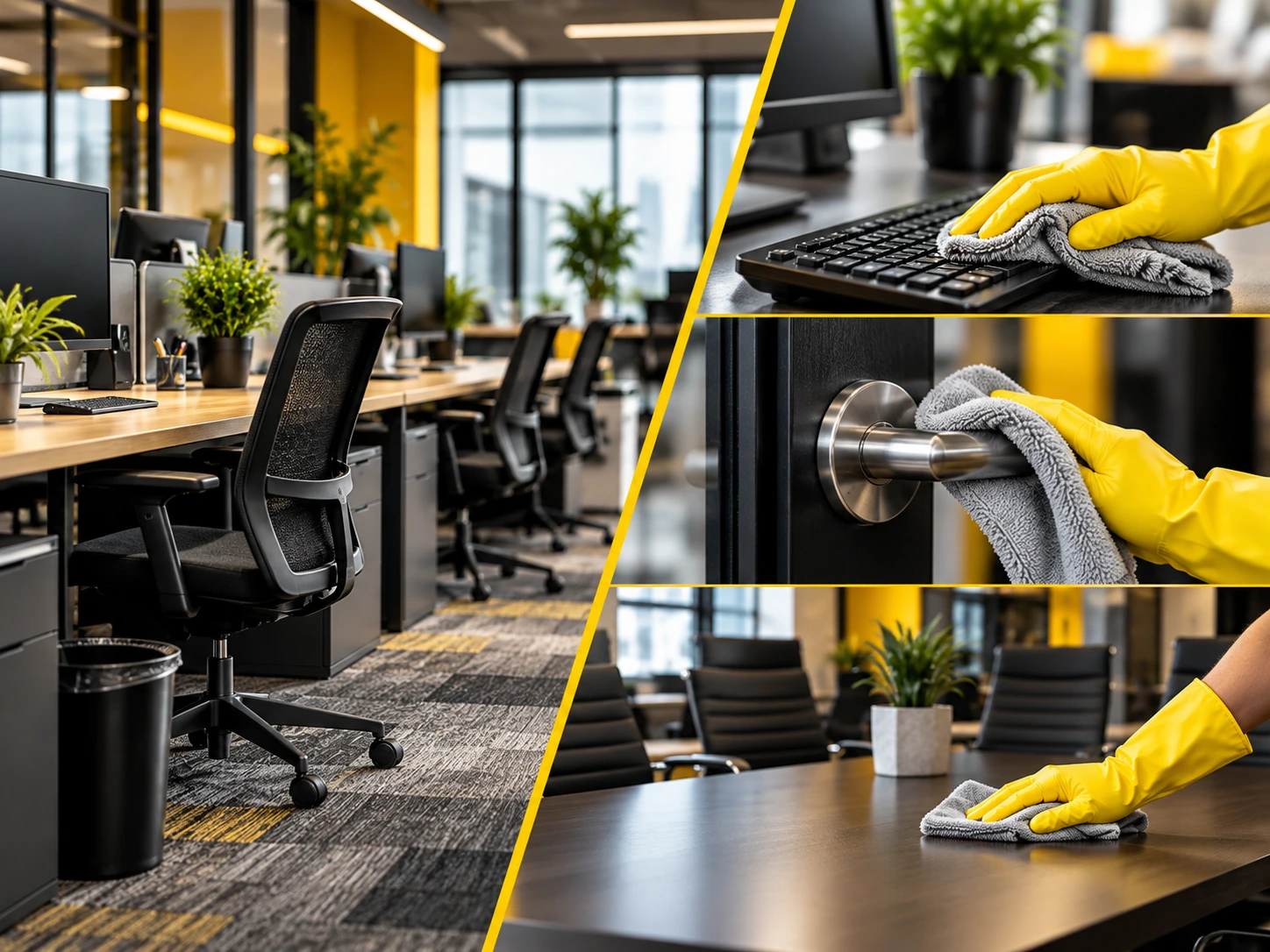
A tidy office is not always a hygienic one. Desks may look presentable while shared keyboards, kitchen handles and washroom touchpoints go untouched. Common office hygiene mistakes often come down to missed areas, unclear responsibilities or a cleaning schedule that no longer matches how the workplace is used.
Good commercial office hygiene combines regular cleaning, sensible habits and attention to the spaces people share. At FlexCleaning, we help businesses keep those everyday details under control with office cleaning planned around their premises and working day.
How Poor Office Hygiene Affects the Workplace
Dirty touchpoints can allow germs to pass between hands and shared surfaces, while dust, food residue and overflowing bins make communal spaces unpleasant to use. Neglected washrooms or reception areas can also undermine the impression your business makes on visitors.
Maintaining commercial hygiene is about more than making the office look clean at the start of the day. It means keeping frequently used areas ready for staff and visitors, providing handwashing supplies and dealing with spills or faults promptly. Cleaning supports workplace hygiene, but it does not replace handwashing, suitable ventilation or building maintenance.
Suggested read: The Role of Commercial Cleaning in Employee Wellness
Common Office Hygiene Mistakes and How to Avoid Them
1. Neglecting high-touch surfaces
Door handles, lift buttons, light switches, shared phones and meeting-room controls are used repeatedly, yet a quick clean often focuses on larger, more visible surfaces. Reception counters, stair rails and kitchen cupboard handles can be missed for the same reason.
How to avoid it: Map the touchpoints people use throughout the office and include them in the cleaning schedule. Increase attention in busy areas rather than treating every surface alike. Remove visible dirt first, then use a suitable disinfectant where required, following its instructions and contact time. A quick wipe that dries too soon may not achieve the intended result.
2. Allowing desks to become clutter zones
Mugs, paperwork and personal belongings can prevent cleaners from reaching the desk surface. Dust and crumbs collect around monitor stands and beneath equipment, even when the visible edge looks clean. Hot desks need particular attention because several people may use the same workspace.
How to avoid it: Agree a clear-desk routine so staff remove cups, food waste and loose items before cleaning. Provide suitable surface-cleaning products and explain how to use them. For shared desks, assign responsibility for checks between users and make sure the desk, chair touchpoints and shared accessories are covered. Protect confidential documents and do not expect cleaners to move sensitive paperwork.
3. Ignoring shared kitchen and communal-area hygiene
Forgotten leftovers, food splashes and unwashed mugs can quickly make a shared kitchen unpleasant. Fridge seals, appliance handles, cupboard fronts and the area around the sink are easy to overlook. Breakout tables and shared seating also collect crumbs and marks throughout the day.
How to avoid it: Ask staff to clear up after preparing food and deal with spills immediately. Set an agreed fridge-clearance day, with notice before unwanted food is removed. Include worktops, sinks, appliance interiors and handles in the cleaning plan, using products suitable for each surface and following any rinsing instructions for food-contact areas.
Separate everyday worktop and handle cleaning from more detailed appliance and storage-area cleaning. Fridge seals, coffee machines and cupboard interiors need an agreed place in the schedule, not attention only when someone notices a problem.
4. Relying on surface cleaning and neglecting deeper floor care
Cleaning only the centre of a room leaves dust and debris around skirting boards, under desks and behind furniture. Carpets can retain ingrained dirt that routine vacuuming does not fully remove, while hard floors may develop sticky residue if the wrong product or dilution is used.
How to avoid it: Match cleaning methods to the flooring and the manufacturer’s guidance. Vacuum regularly, address spills promptly and include edges, corners and entrance mats. Plan periodic office deep cleaning around footfall, visible soiling and the type of flooring rather than waiting for stains or odours to become persistent.
Allow floors to dry and keep people out of damp areas by using barriers, restricting access or cleaning in sections. As HSE notes in its safe floor cleaning guidance, warning signs warn of the hazard but do not prevent entry. FlexCleaning cares for office flooring including wood, tiles, concrete, carpet, vinyl and rubber-studded surfaces; discuss any specialist treatment as part of the agreed scope.
5. Poor waste and bin management
Changing a liner does not clean the bin itself. Food residue, leaking bags and dirty lids can leave odours behind, while overflowing containers make waste areas harder to use properly.
How to avoid it: Check bins daily and empty them before they overflow, with more frequent attention to food waste and busy kitchens. Replace liners as needed, clean lids and touchpoints, and deal with residue inside containers and on surrounding floors. Keep recycling instructions clear and agree who takes waste to the collection point so bags do not accumulate in corridors or shared spaces.
6. Overlooking washroom hygiene and supplies
A clean-looking toilet is not enough if soap has run out, bins are full or cubicle locks and taps are left untouched. Persistent smells may also indicate leaks, drainage problems or ventilation faults rather than a need for more air freshener.
How to avoid it: Include toilet seats, flush controls, cubicle handles, taps, basins and dispensers in the washroom routine. Check toilet paper, soap and hand-drying supplies throughout busy periods. Use separate, clearly identified cleaning equipment for washrooms and kitchens to avoid transferring contamination between areas.
Report leaks, blockages and faulty fixtures promptly. Meeting workplace welfare standards includes providing toilets and hand basins with soap and suitable hand-drying facilities; routine checks help keep them usable during the working day.
7. Using an unclear or outdated cleaning schedule
Leaving cleaning “as needed” makes it easy for tasks to fall between employees, facilities staff and external cleaners. A plan can also become outdated as headcount, office attendance or meeting-room use changes.
How to avoid it: Set out the task, location, frequency and responsible person or team. Separate routine cleaning from periodic detailed work, and define the result you expect: for example, a kitchen counter free of food residue, not simply “kitchen done”. Review the schedule when usage changes and spot-check completed work.
Plan around access times and when rooms need to be ready: a reception area used from opening and a meeting room booked later in the day may need different cleaning windows.
Suggested read: Office Cleaning Checklist: A Step-by-Step Guide
8. Forgetting shared equipment or cleaning it incorrectly
Printer controls, shared tablets, keyboards, mice and desk phones can be overlooked because responsibility for them is unclear. Using excessive liquid or unsuitable chemicals can damage electronics instead of improving office hygiene.
How to avoid it: Assign responsibility for shared devices and follow the manufacturer’s cleaning instructions. Use approved products, avoid spraying liquid directly onto equipment and do not allow moisture into openings. Switch off or disconnect devices where instructed. Internal servicing belongs with an appropriate technician, not the general cleaning routine.
9. Treating ventilation as a cleaning issue alone
Dust on accessible vents, blocked air paths and poorly maintained ventilation systems can be missed during an office clean. Fragrance may hide an odour briefly, but it does not remove its source or improve ventilation.
How to avoid it: Keep vents unobstructed and include accessible grilles and nearby surfaces in dust-removal routines. Leave filter changes and internal system maintenance to the facilities team or a ventilation specialist, following the equipment and manufacturer requirements. Opening windows, where safe and suitable, does not replace maintaining the ventilation system. Adequate workplace ventilation means supplying sufficient fresh air; dusting visible grilles alone is not ventilation maintenance.
Confirm any specialist ventilation cleaning or maintenance separately; do not assume it is part of general office cleaning.
How to Improve Office Hygiene With a Practical Routine
Consistent office cleaning standards are easier to maintain when everyone knows what is expected. Build a plan around how your premises are used:
- During the working day: deal with spills, clear food waste, keep shared desks usable and check washroom supplies. Allocate extra checks to the busiest areas.
- At each scheduled clean: cover agreed touchpoints, floors, kitchens, washrooms, bins and communal spaces, including meeting rooms and reception.
- At planned intervals: tackle less accessible surfaces, detailed appliance cleaning and deeper floor care. Arrange specialist work separately where required.
- When something is missed: give staff a straightforward way to report empty dispensers, odours, spills or unfinished tasks to the person responsible.
Staff habits and professional cleaning should complement each other. Clearing a desk or washing a mug makes thorough cleaning easier, but it should not leave employees responsible for tasks outside their role.
When Should You Consider Professional Office Hygiene Services?
Professional workplace hygiene services can help when shared areas repeatedly fall below the standard you need, staff are trying to fit cleaning around their main jobs, or changing attendance makes the existing routine unreliable. They can also supplement routine upkeep with a planned, more detailed clean.
Office hygiene services should have a clearly agreed scope. Depending on your premises, this may cover high-touch surfaces, washroom cleaning and supply checks, kitchen care, waste handling, floor cleaning and shared areas. Confirm who supplies consumables, who replenishes them, which equipment can be cleaned and what periodic work is included. Ventilation servicing and specialist hygiene services should not be assumed to form part of a standard cleaning contract.
Suggested read: 10 Signs Your Office Needs Professional Cleaning
Why Choose FlexCleaning for Office Cleaning?
For businesses seeking professional office cleaning in London, FlexCleaning is a family-run cleaning company based in Farringdon with a local reputation built since 2009. We provide tailored commercial office cleaning for workstations, meeting rooms and boardrooms, reception areas, kitchens, washrooms and a range of floor surfaces.
- Cleaning that fits your working day. FlexCleaning offers daily or weekly support, tailored schedules and early-morning, evening or overnight cleaning, alongside periodic deep cleans. Discuss attendance patterns, busy shared areas and access times so the plan reflects how your office actually operates.
- Safe product handling. FlexCleaning states that its staff are trained, insured and COSHH-compliant. HSE guidance for cleaners explains that controls depend on the task and can include safe work techniques, secure product storage, personal protective equipment where needed and adequate ventilation.
- A reputation supported by customer feedback. Customer reviews frequently highlight reliability, professionalism, thorough cleaning and friendly communication—qualities that matter when you need consistent workplace upkeep.
FlexCleaning serves workplaces in Central London, including Clerkenwell, Farringdon, Midtown and nearby areas. We agree the tasks, cleaning frequency and access arrangements around each office’s premises and working hours.
FAQs About Office Hygiene and Cleaning
How often should an office be professionally cleaned?
Many busy offices benefit from daily cleaning, but attendance and room use matter more than floor area alone. Review the condition of kitchens, washrooms and shared desks between cleans. If food residue, overflowing bins or dirty touchpoints recur before the next visit, increase attention to those areas rather than automatically increasing every task’s frequency.
Does every office surface need disinfecting?
No. Cleaning removes dirt and residue; disinfection is an additional step where the risk or agreed cleaning plan calls for it. Do not substitute a disinfectant for removing visible dirt unless the product is designed for both tasks. Check the label for suitable surfaces, dilution and contact time, and follow the manufacturer’s instructions for electronics.
Who should check hot desks between users?
Give a named person or team responsibility for the handover routine. Staff can clear belongings and report problems, while facilities staff or cleaners carry out the agreed cleaning tasks. Leave time for the product’s required contact time and for surfaces to dry before the next person uses the desk.
What should we arrange before the first professional clean?
Confirm how cleaners will enter and leave the building, which rooms they can access and any areas or equipment they must not touch. Explain how confidential paperwork should be protected and who can answer questions on the day. Agree these details in advance rather than assuming keyholding or alarm handling is included.
Do you cover offices in Clerkenwell and Farringdon?
Yes. FlexCleaning serves Central London, including Clerkenwell, Farringdon and surrounding areas. Share your address when enquiring so the team can confirm coverage.
Make Better Office Hygiene Part of Your Routine
Avoiding common office hygiene mistakes is easier when tasks are specific and responsibility is clear. Start with the gaps in your current routine, then check that the agreed cleaning is keeping shared spaces ready for use.
Request a tailored quotation for office cleaning in London. Tell FlexCleaning your location, priority areas, preferred frequency and access times so the team can propose a flexible schedule and a cleaning plan built around your workplace, helping keep shared spaces presentable with minimal disruption. Call 020 7415 7008, email info@flexcleaning.co.uk or contact FlexCleaning through the enquiry form.