
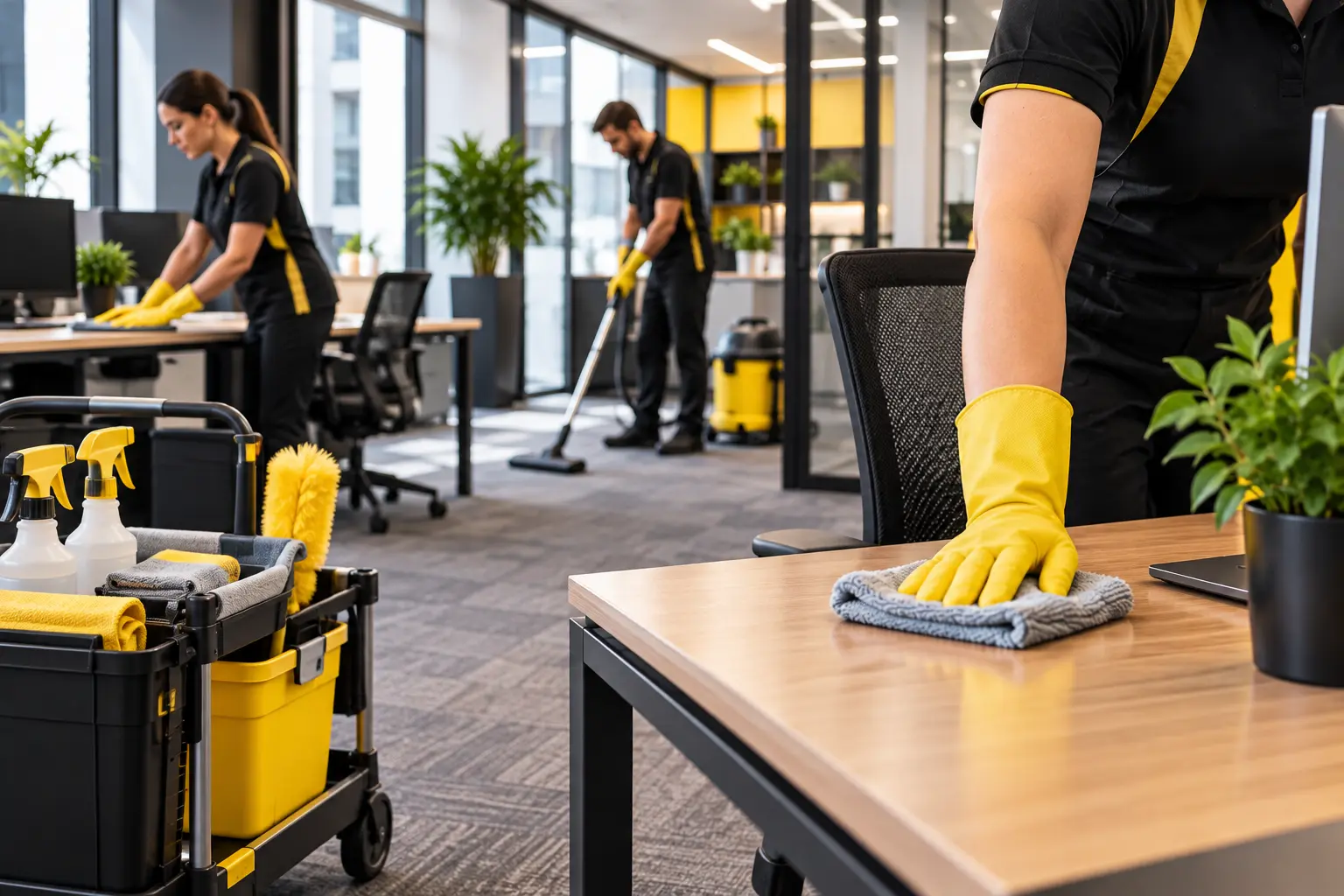
A clean office makes a better impression on visitors and gives your team a more comfortable place to work. But keeping it that way takes more than a quick tidy: someone needs to know which areas to clean, how often to clean them and what a finished job should look like.
An office cleaning checklist brings those details together. It covers daily essentials such as bins, desks, kitchens and washrooms, alongside weekly dusting and periodic deeper cleaning. Paired with a clear schedule, it helps prevent less obvious tasks from being forgotten.
For businesses arranging office cleaning in Clerkenwell, Farringdon or Midtown, the routine needs to fit around staff, visitors and building access. Start with the daily tasks, then give weekly and periodic work a clear place in the schedule.
Why an Office Cleaning Checklist Matters
A structured checklist makes cleaning consistent rather than reactive. It helps you:
- Keep reception areas and meeting rooms ready for visitors.
- Give high-touch surfaces and shared facilities regular attention.
- Separate everyday upkeep from tasks that need more time or specialist equipment.
- Agree responsibilities and check whether work has been completed.
At FlexCleaning, we tailor office cleaning to how each workplace operates, balancing hygiene, presentation and minimal disruption. A useful plan considers when the building is busiest, who uses each space and which areas need to be ready first—not just the size of the office.
Your Office Cleaning Checklist: Daily, Weekly and Monthly Tasks
Use the following as a starting point, then adjust it for staff numbers, visitors, flooring and shared facilities. Look at actual room use as well as occupancy: an office with fewer staff may still have a busy reception or heavily used meeting rooms. Daily tasks apply on days the office is used; spills need prompt attention, while busy kitchens and washrooms may need additional checks during the day.
Daily office cleaning checklist
Reception and communal areas
- Wipe reception counters, accessible shelves and waiting-area tables.
- Clean door handles, light switches, lift buttons and handrails using products suitable for each surface.
- Remove fingerprints from glass doors and partitions.
- Vacuum entrance mats and busy carpeted routes; sweep and mop suitable hard floors.
- Empty bins, replace liners as needed and tidy leaflets or magazines.
- Check entrances and walkways are clear, with no wet patches or trip hazards.
Desks and workstations
- Clean clear desk surfaces, including shared desks between users where practical.
- Remove crumbs and wipe phones, keyboards and mice following the equipment manufacturer’s instructions.
- Clean shared printer controls and other frequently handled equipment.
- Empty desk bins where included in the cleaning plan.
Agree a clear-desk policy so cleaners can reach surfaces without moving confidential paperwork or personal belongings. Do not spray liquid directly onto electronics.
Meeting rooms and boardrooms
Clean meeting rooms and boardrooms around room bookings, rather than relying solely on an evening visit.
- Remove used cups, food waste and rubbish after meetings.
- Wipe tables, chair arms, door handles and shared controls.
- Clean presentation screens and glass with suitable products.
- Vacuum or mop floors as appropriate, checking beneath tables for crumbs.
- Reset chairs and leave the room ready for the next booking.
For client-facing rooms, arrange a quick presentation check before important meetings as well as the regular clean. Where bookings run back-to-back, build a short cleaning turnaround into the room’s schedule.
Office kitchen and canteen cleaning checklist
- Clean worktops, sinks, taps and cupboard handles.
- Wipe appliance exteriors, including fridge handles, microwaves and coffee machines.
- Remove fresh food spills promptly, including inside microwaves.
- Wash up or load and unload the dishwasher, according to agreed responsibilities.
- Empty food-waste and general-waste bins before they overflow; clean bin lids and surrounding areas.
- Sweep and mop floors, paying attention to sticky patches and spills.
Keep cleaning products separate from food. Staff should label stored food and follow an agreed fridge-clearance routine so forgotten leftovers do not become everyone else’s problem.
Toilets and washrooms
- Clean toilet bowls, seats, flush controls, basins and taps.
- Clean and disinfect relevant touchpoints, including door handles and dispenser controls.
- Replenish toilet paper, hand soap and hand-drying supplies.
- Clean mirrors, empty general-waste bins and check sanitary-waste arrangements.
- Mop floors with equipment reserved for washrooms.
- Check for leaks, blocked drains or persistent odours and report issues that cleaning alone cannot resolve.
Use separate cloths and equipment for toilets, kitchens and general office areas to reduce cross-contamination.
Weekly office cleaning checklist
Weekly work gives more detailed attention to areas beyond the daily wipe-down. It should supplement, not replace, regular touchpoint cleaning.
- Dust accessible shelves, window ledges, skirting boards, furniture legs and external vent grilles.
- Clean chair bases and other areas missed during daily floor cleaning.
- Vacuum carpet edges and beneath safely accessible furniture.
- Clean microwave interiors thoroughly and check fridge shelves for spills or expired food under the agreed policy.
- Wipe accessible cupboard fronts and kitchen splashbacks.
- Clean bin interiors and check waste-storage areas.
- Review recurring marks, missed areas and stock levels for the following week.
These easily overlooked office areas deserve a named task and owner rather than being left until dust is obvious. Increase the frequency wherever dirt or food residue builds up sooner.
Monthly office cleaning tasks
Use a monthly review to plan more detailed cleaning, rather than assuming every floor or carpet needs the same treatment each month.
- Empty and clean fridge interiors under the agreed food-clearance procedure.
- Clean accessible cupboard interiors and storage shelves once contents have been safely removed.
- Inspect carpets and upholstery for stains or ingrained dirt; arrange suitable treatment where needed.
- Clean internal glass and reachable window surfaces.
- Descale taps and appliances where needed, following the manufacturer’s instructions.
- Check hard floors for residue or wear and agree appropriate machine cleaning or maintenance.
Vacuuming and spill removal remain routine jobs. Pay particular attention to entrance mats and traffic routes, where grit is carried further into the office. Check the flooring material before choosing a method: carpet, wood, vinyl, laminate and tile do not all tolerate the same products or moisture levels.
Carpet extraction, upholstery cleaning and floor treatments should follow the material’s care guidance, level of use and condition. Avoid over-wetting carpets or using harsh products on sensitive finishes, and plan any treatment around the time needed for the area to dry safely.
Seasonal cleaning and an office deep cleaning checklist
Periodic office deep cleaning addresses build-up that routine visits cannot fully cover. Depending on your workplace, this may include:
- Detailed cleaning behind or beneath safely movable furniture.
- Carpet extraction and upholstery cleaning where appropriate.
- More intensive kitchen cleaning, including appliance interiors and cupboard edges.
- Washroom descaling and attention to grout, corners and hard-to-reach areas.
- Blind cleaning and high-level dusting by people with suitable equipment and training.
- Specialist hard-floor care where the finish requires it.
- External window cleaning using safe access arrangements.
Agree these jobs separately, including drying time and access requirements. Floor stripping or resealing is not a routine quarterly task for every material; it should only be planned where the finish and its condition justify it.
A one-off deep clean can also be useful before an office move or handover. Add emptied cupboards, cleared workstations and areas revealed when furniture is removed to the agreed scope, then check it against any landlord or handover requirements.
Office Cleaning Procedures: A Practical Order of Work
A duties list is more useful when cleaners also know how to approach it. A sensible routine is to:
- Prepare the area. Check access, remove agreed waste and identify spills, damage or hazards before starting.
- Use suitable products and equipment. Follow labels, dilution instructions and any required protective measures. Never mix cleaning chemicals.
- Work from higher surfaces downwards. Remove dust before wiping surfaces, and leave floors until after work above them.
- Keep cleaner and dirtier areas separate. Change cloths and use dedicated washroom equipment rather than carrying contamination into kitchens or desks.
- Clean before disinfecting where needed. Remove visible dirt first and allow the disinfectant’s stated contact time, following the product instructions.
- Finish with a check. Leave floors safe to use, put equipment away securely and record completed tasks or unresolved problems.
For chemical use, the cleaning plan should reflect the relevant COSHH assessment and staff training. Follow safe floor-cleaning precautions: restrict access to wet floors until they are dry, use warning signs where needed and keep escape routes clear of cleaning equipment.
How to Create an Office Cleaning Schedule
Start with your office’s occupied days, staff numbers, visitor traffic, room bookings and flooring. Then turn the checklist into a schedule that states what gets cleaned, when it happens, who is responsible and how completion is checked.
A smaller hybrid office may need fewer full cleaning visits than a busy shared workplace, but kitchen waste, spills and washroom supplies still need attention whenever the facilities are used.
A simple office cleaning schedule template
Copy and adapt this example, adding a completion date, initials and any issues after each task. Replace the responsibility column with named staff or the relevant cleaning-rota assignment.
| Area or task | Starting frequency | Responsibility | Completion check |
|---|---|---|---|
| Reception, desks, bins and busy floors | Each occupied day | Assigned cleaner | Clear surfaces, emptied bins and safe floors |
| Kitchen and washrooms | Each occupied day, with extra checks as needed | Cleaner; nominated staff for daytime checks | Clean surfaces, waste removed and supplies stocked |
| Meeting rooms and boardrooms | After use; before key meetings | Room users for tidying; cleaner for cleaning | Tables clean, rubbish removed and room reset |
| Detailed dusting and floor edges | Weekly | Assigned cleaner | Accessible ledges, edges and chair bases checked |
| Fridge interiors and storage areas | Monthly or sooner if needed | Cleaner with staff food-clearance support | Agreed contents removed and surfaces cleaned |
| Carpets, upholstery and specialist floor care | At agreed condition-based intervals | Suitable cleaning team | Treatment completed and drying time allowed |
Define an office cleaning specification
A cleaning specification sets out the service you have agreed, while the schedule shows when it happens. Include the rooms, surfaces, tasks, methods where relevant, visit frequency, expected finish and any exclusions.
Be specific: “clean the kitchen” is less useful than “clean worktops, sink, taps, appliance handles and floor; empty food waste”. Describe the expected finish too: worktops free of visible residue, bins emptied and relined where agreed, and floors safe to use. This gives the cleaner and office manager a shared basis for checking the work.
Confirm separately whether washing up, internal windows, carpet extraction and sanitary-waste servicing are included. Identify who should receive reports of leaks, damaged surfaces or access problems, since cleaning alone will not resolve those issues.
Suggested read: What Businesses Should Know About Contract Cleaning
Arrange out-of-hours cleaning and review the results
For early morning, evening, overnight or weekend work, confirm the agreed visit window and how the team will enter and leave the building. Set out any key, alarm, restricted-room and building-access requirements rather than assuming they are included. Allow enough time for wet floors or treated carpets to dry before staff return. FlexCleaning offers flexible scheduling around your operational hours, with visit times and access arrangements agreed for your workplace.
Check the schedule regularly with a short walk-through. Look for visible residue, full bins, missed touchpoints and empty dispensers; review recurring problems with the cleaner. Adjust the cleaning roster when staff numbers, room use or visitor traffic change.
Everyday Habits That Support Workplace Cleanliness
Professional cleaning works best when staff know the simple office cleaning rules that apply between visits:
- Keep desks clear enough for cleaning and store confidential documents securely.
- Wash up after using the kitchen and deal with spills promptly.
- Put waste in the correct bins and flag overflowing containers.
- Leave meeting rooms tidy for the next booking.
- Report empty dispensers, leaks and cleaning concerns to the nominated contact.
These habits support the cleaning team; they should not leave employees informally responsible for specialist or intensive cleaning.
Suggested read: Common Office Hygiene Mistakes and How to Avoid Them
When to Use Professional Office Cleaners
Consider professional office cleaners if routine duties are repeatedly missed, shared facilities need more attention than staff can provide, or deeper work requires specialist equipment. Agree the priorities and scope so cleaning becomes a scheduled service rather than an informal task passed between colleagues.
If dust quickly returns or floors still look dirty after cleaning, review the frequency, products and methods being used. Persistent odours may also need investigation: waste or surface build-up can be cleaning issues, but leaks and drainage faults need maintenance rather than another clean.
Suggested read: 10 Signs Your Office Needs Professional Cleaning
Why Choose FlexCleaning?
FlexCleaning is a family-run cleaning business serving Clerkenwell, Farringdon, Midtown and surrounding Central London areas since 2009. We turn your office cleaning checklist into a practical service built around your workspace and working day.
- A plan tailored to your office: Tasks and visit frequency reflect your layout, staff numbers, shared facilities and visitor traffic, with routine cleaning distinguished from agreed deeper work.
- Flexible cleaning times: Early morning, evening and overnight visits help keep cleaning out of the way of staff and important meetings.
- COSHH-trained staff: Our team has relevant training in handling cleaning products safely and uses methods suited to the surfaces being cleaned.
Explore our office cleaning services to find a cleaning arrangement that fits your workplace.
Frequently Asked Questions
How can I use the checklist to compare office cleaning quotes?
Ask each provider to quote for the same rooms, tasks and visit frequency. Confirm whether cleaning products, washroom consumables, washing up and periodic deeper work are included or charged separately. Comparing the agreed scope, not just the headline price, makes differences between quotes easier to understand.
Does FlexCleaning offer one-off office deep cleans?
Yes. We can agree a one-off clean for areas needing more intensive attention, alongside regular cleaning if required. Before booking, identify the rooms, surfaces and priority tasks, and confirm access, any items that need clearing and the time available for treated areas to dry.
What areas in London does FlexCleaning cover?
Our Central London service covers offices in Shoreditch and offices in Holborn, as well as workplaces in Clerkenwell, Farringdon and Midtown. Contact us to confirm coverage and access arrangements for your office.
Keep Your Office Clean With a Plan That Works
A useful office cleaning checklist should fit your workplace, not the other way around. Start with the daily essentials, give periodic tasks a place in the schedule and make responsibilities clear.
To put your cleaning plan into practice, call FlexCleaning on 020 7415 7008 or email info@flexcleaning.co.uk for a tailored office cleaning quote. Tell us about your workspace, preferred visit times and priority areas so we can discuss a suitable cleaning arrangement. If you prefer, send us an enquiry through our website.