
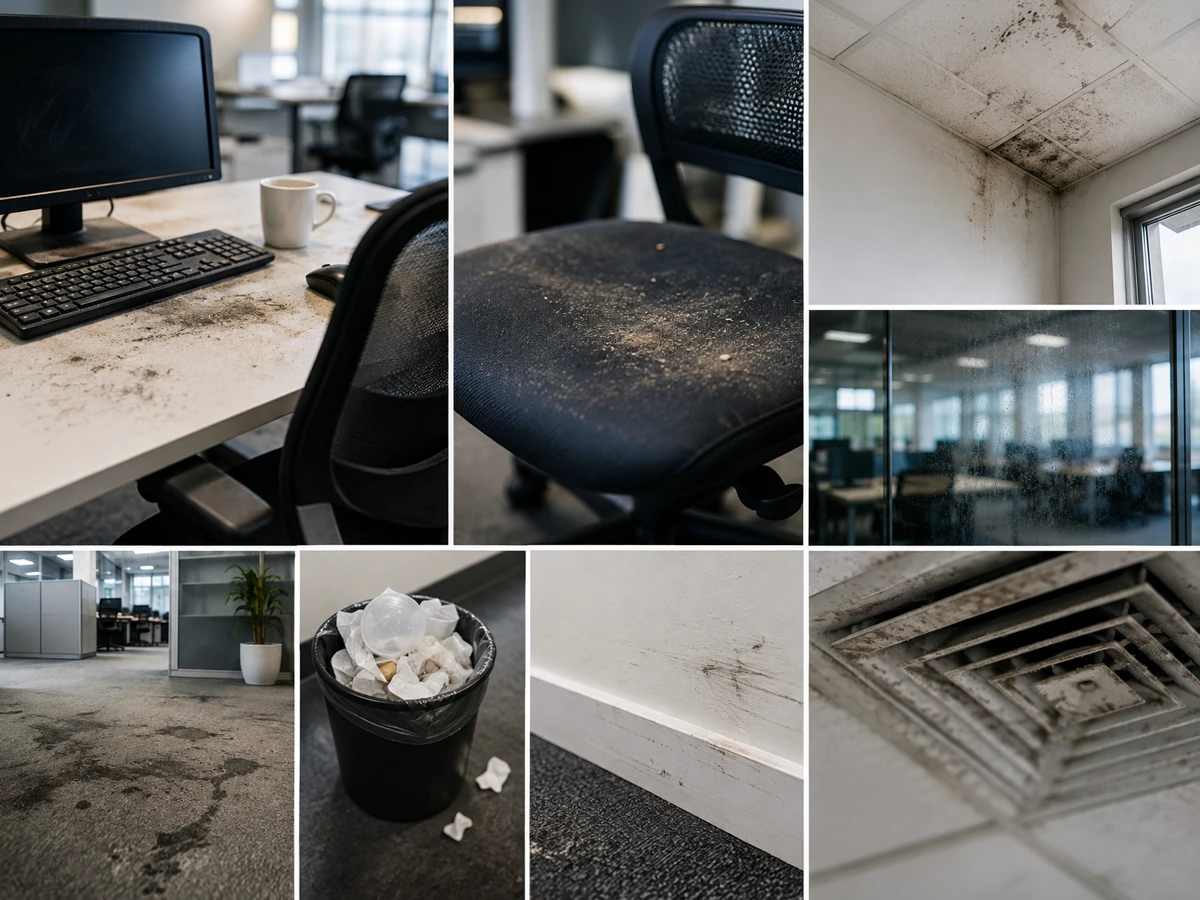
Small workplace problems can quickly stack up: dust returns soon after cleaning, kitchens never feel fresh, carpets still look tired after vacuuming, or staff spend time wiping down communal areas.
For office managers and business owners, the practical question is whether the current routine still suits the way the office is used. Desks, meeting rooms, kitchens, washrooms, reception areas and touchpoints all experience different levels of traffic.
FlexCleaning has supported commercial properties in Farringdon and Central London since 2009. That local experience helps the team shape cleaning around working hours, shared facilities, visitor patterns and access requirements.
Whether you need regular office cleaning, commercial office cleaning for a larger workplace or scheduled office deep cleaning, the service should reflect your footfall, layout and priorities. If the signs below feel familiar, explore FlexCleaning’s professional office cleaning services and request a plan built around how your workplace operates.
1. Dust Comes Back Almost Immediately
Dust on desks is obvious. Dust on vents, skirting boards, shelves, monitor stands, cable areas, window ledges, and the tops of cupboards is easier to miss.
If dust seems to return quickly after cleaning, the issue may not be the dust itself. It may be that the routine only covers the most visible surfaces. In a busy office, overlooked areas keep feeding dust back into the space, especially around air vents, storage areas, electronics, and cluttered workstations.
A useful test is to check the same areas every week: behind monitors, along skirting boards, on top of storage units, around printer stations and near air vents. If the same dust keeps reappearing, the cleaning routine may need a clearer dust-control schedule rather than occasional surface wiping.
Professional office cleaners can build dusting into a proper schedule rather than treating it as an occasional task. That matters because dust affects both presentation and comfort, particularly in meeting rooms, reception areas, and shared workspaces. Fresh air also matters in enclosed workplaces, and the HSE notes that employers must provide adequate workplace ventilation to help remove stale air and pollutants.
Suggested read: Common Office Hygiene Mistakes and How to Avoid Them
2. Carpets And Floors Look Tired Even After Vacuuming
Office floors work hard. Entrances collect grit, corridors take constant traffic, chair wheels mark carpet fibres, and kitchen areas often pick up spills. Regular vacuuming helps, but it cannot fix every stain, dull patch, or ground-in mark.
Look at the areas people use most: doorways, walkways, lift entrances, reception spaces, under desks, and around kitchen points. If the floor still looks worn straight after cleaning, the office may need deeper carpet cleaning, floor care, or a better daily maintenance routine.
If vacuuming and mopping leave the same worn-looking areas behind, routine upkeep may need support from periodic carpet or hard-floor treatment. Professional cleaners can separate everyday maintenance from specialist floor care so entrances, walkways and kitchen areas remain presentable.
3. There Are Persistent Odours
A clean-looking office can still smell wrong.
Persistent odours often come from a source that the normal routine is not dealing with: bins, food waste, fridges, microwaves, carpets, upholstery, drains, washrooms, or poorly ventilated areas. Air fresheners may mask the problem for a short time, but they do not solve it.
The useful question is: where is the smell coming from, and why does it keep returning?
Odour problems are especially common where food areas, bins, soft furnishings and shared facilities sit close together. A professional team can trace likely sources and recommend practical changes, such as more frequent waste removal, appliance cleaning, carpet treatment or targeted washroom care.
4. High-Touch Surfaces Are Being Missed
Door handles, light switches, keyboards, shared phones, printer buttons, kitchen handles, meeting room controls, taps, and bannisters are used constantly. They are also easy to miss when cleaning is rushed or informal.
High-touch surfaces should be recurring priorities, not occasional extras. If these points look marked, sticky, dusty, or inconsistent from day to day, the cleaning routine may not be detailed enough. UK workplace rules require workplaces, furniture, furnishings and fittings to be kept sufficiently clean, which supports keeping frequently handled shared surfaces within the regular cleaning routine.
A good commercial office cleaning schedule separates general tidying from touchpoint cleaning. That gives the busiest shared surfaces the regular attention they need without relying on employees to remember. A practical office cleaning checklist can also help managers compare what is being done against what the workplace actually needs.
The key is consistency. Touchpoint cleaning should not depend on whether someone notices a mark. It should be part of a repeated routine covering the specific points that staff, visitors, contractors and delivery teams use most.
5. Bathrooms And Kitchens Are Hard To Keep Presentable
Kitchens and washrooms are usually the first areas to expose a weak cleaning routine. They are shared, used throughout the day, and very visible to staff and visitors.
Watch for limescale, overflowing bins, unpleasant smells, sticky counters, stained sinks, empty dispensers, marked mirrors, tired floors, or grime building around taps and edges. If these areas never feel properly reset, a light routine is probably not enough.
These areas also need a different standard from a desk area. A meeting table may need wiping and resetting, but a kitchen may need surfaces, handles, appliances, bins, floors and food-waste points checked more often. Washrooms may need attention to dispensers, touchpoints, mirrors, odours, sanitary waste points, floors and edges where grime builds slowly.
In office cleaning, kitchens and washrooms need a different rhythm from desks or meeting rooms. They may need more frequent checks, deeper periodic work, and clearer responsibility for supplies, bins, surfaces, and floors.
6. Employees Are Spending Time Cleaning
There is a difference between staff keeping their own desks tidy and employees regularly having to clean kitchens, empty bins, wipe communal areas, or deal with mess before meetings.
If cleaning has become an informal staff responsibility, the business may be losing time and consistency. People clean to different standards. They may not have the right products. They may also avoid jobs that feel unpleasant or outside their role.
This is also a management issue. When cleaning tasks sit informally with employees, nobody has a clear schedule, checklist or standard to work from. One person may wipe the kitchen after lunch; another may leave it for the next person. Over time, this creates uneven results and frustration.
A professional cleaning team gives these tasks a clear owner and an agreed standard. Staff can still look after their own work areas, while FlexCleaning’s office cleaning services in London handle the core routine consistently and around the working day.
7. The Office Looks Unprofessional To Visitors
A workplace does not need to be spotless in a showroom sense. It does need to look cared for.
Reception dust, stained entrance mats, fingerprints on glass, overflowing bins, marked meeting tables, and tired washrooms can all affect how clients, candidates, suppliers, and staff perceive the business. These details quietly tell people whether the workplace is being managed well.
Presentation and hygiene work together. Visitors may not know whether every touchpoint has been sanitised, but they will notice sticky tables, dusty reception surfaces, full bins or tired washrooms.
FlexCleaning’s experience with commercial properties in Farringdon and across Central London helps the team plan around busy working hours, shared building access and visitor-facing spaces without repeatedly interrupting the working day.
8. Periodic Cleaning Tasks Keep Being Put Off
Windows, upholstery, carpets, high shelves, skirting boards, kitchen appliances and areas behind furniture can all sit outside the daily routine. The problem is that “not daily” can easily become “not done”.
If nobody can remember when these jobs were last completed, the office needs clearer intervals and ownership. Adding them to an agreed schedule is more reliable than waiting for visible build-up or arranging one-off help whenever standards begin to slip.
9. Cleaning Standards Change From Day To Day
One day the office looks fine. The next day the bins are missed, the kitchen feels poor, or the meeting room is not ready.
Inconsistent cleaning usually points to one of three issues: unclear scope, poor scheduling, or a service that no longer matches how the office is being used. A growing team, hybrid working, more meetings, new visitors, or extra kitchen use can all change what the office needs.
A professional cleaning provider should help define what is cleaned, how often, and which areas need extra attention. That is the value of a cleaning plan rather than a vague agreement to “keep things tidy”.
When reviewing the standard, ask specific questions: Are meeting rooms reset before client use? Are kitchen touchpoints checked daily? Are bins managed before they overflow? Are washrooms inspected often enough for current footfall? Are reception areas ready at the start of the day? Specific questions reveal gaps faster than a general complaint that the office “doesn’t feel clean”.
10. You Cannot Remember The Last Office Deep Clean
Routine cleaning keeps an office usable, while an office deep clean resets areas that everyday maintenance cannot fully cover. If the last one is hard to remember, old dust, carpet marks, food residue and odours may be building up out of sight.
Plan deeper work before standards visibly slip, particularly ahead of busy visitor periods, seasonal events, team growth or refurbishment. FlexCleaning can combine regular office cleaning with periodic deep-cleaning tasks so each has a clear purpose rather than repeating the same work.
What A Strong Office Cleaning Plan Should Include
If several of the signs above sound familiar, the next step is to review the cleaning plan itself. A strong office cleaning plan should usually define:
- the areas cleaned daily, weekly and periodically
- priority zones such as kitchens, washrooms, reception areas and meeting rooms
- high-touch points that need regular attention
- floor-care requirements for carpets, hard floors and entrance areas
- deeper tasks such as upholstery, windows, appliances and hard-to-reach areas
- cleaning times that work around staff, visitors, access and building rules
- responsibility for supplies, bins, touchpoints and shared facilities
Commercial office cleaning has to fit around the working day as well as the workspace. The right schedule should reflect footfall, opening hours, shared facilities, building access and the standard the business wants to present.
Why Choose FlexCleaning
FlexCleaning is a family-run commercial cleaning company serving Farringdon and Central London. The company has worked to build its reputation in the area since 2009, giving its team practical experience of busy offices, shared buildings and visitor-facing commercial spaces.
Its office cleaning service can be tailored for corporate offices, creative studios and shared workplaces. Available support includes daily cleaning, after-hours visits and periodic deep cleans, with the scope shaped around footfall, layout and access requirements.
FlexCleaning states that its staff are trained, insured and COSHH-compliant. This supports the safe use of suitable products and methods for each task. HSE guidance on COSHH in cleaning work also stresses the importance of controlling exposure to cleaning substances and ensuring workers understand the risks.
At the time of writing, FlexCleaning’s Trustindex profile shows a 5.0 rating from 57 Google reviews. Feedback frequently highlights reliability, professionalism, communication, flexibility and thorough work.
For office managers, the practical benefit is a defined service: what will be cleaned, how often it will be completed and which periodic tasks need separate attention. That makes standards easier to monitor and the service easier to adjust as the workplace changes.
FAQs
How do I know if my office needs professional cleaning?
Your office may need professional cleaning if the same problems keep returning despite regular tidying. Persistent dust, odours, stained flooring, poor washroom presentation, missed touchpoints, and inconsistent results are all signs that the current routine may not be detailed enough.
Are professional office cleaning services different from basic cleaning?
Yes. Basic cleaning often focuses on visible tidying, bins, vacuuming and obvious surfaces. Professional office cleaning services use an agreed scope covering high-touch points, shared kitchens, washrooms, workstations, meeting rooms, floors and periodic tasks.
How often should an office be professionally cleaned?
It depends on footfall, staff numbers, visitors, kitchen use, washroom use, and the type of work carried out in the space. Some offices need daily cleaning, while smaller or hybrid workplaces may need a custom schedule with periodic deep cleans.
Can professional cleaning be done outside office hours?
Yes. Office cleaning can often be arranged outside normal working hours to reduce disruption. FlexCleaning supports daily, weekly, custom, out-of-hours, weekend, and one-off cleaning options for commercial clients.
What should an office cleaning checklist include?
An office cleaning checklist should cover workstations, meeting rooms, reception areas, kitchens, washrooms, bins, floors, high-touch surfaces and periodic deep-cleaning jobs. It should also separate daily tasks from weekly or monthly work so important areas are not missed.
Request A Tailored Office Cleaning Quote
Recurring dust, odours, tired floors or inconsistent standards are signs that the current routine may no longer suit your workplace. FlexCleaning can assess your priorities and create a practical scope for workstations, kitchens, washrooms, communal areas, meeting rooms and periodic deeper cleaning.
Review FlexCleaning’s professional office cleaning services or request a tailored quote. Call +44 (0) 20 7415 7008 or email info@flexcleaning.co.uk to discuss your workplace, preferred schedule and priority areas.