
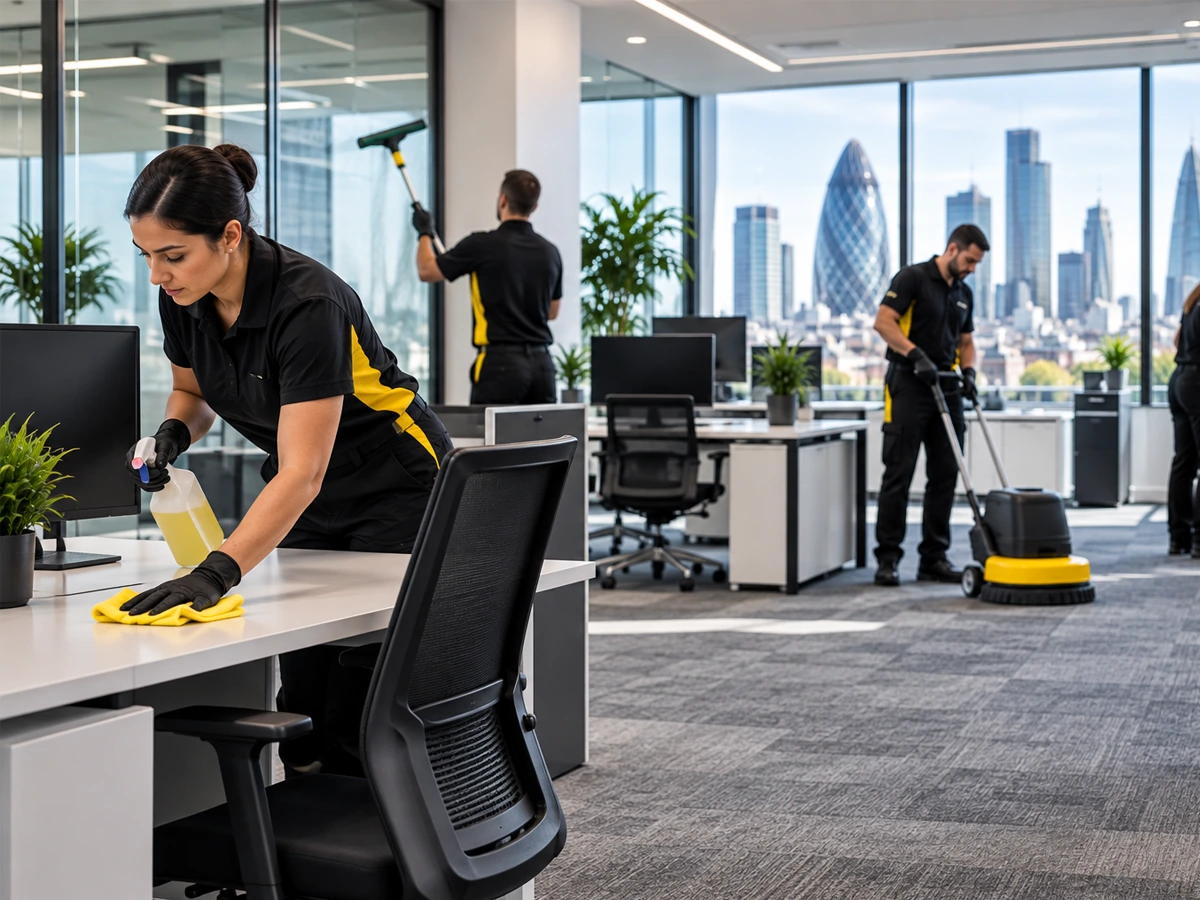
Office deep cleaning tackles the build-up and overlooked areas that routine visits cannot always cover. If your office is cleaned every day or several times a week, that regular work still matters. It keeps bins, floors, washrooms, kitchens and shared spaces under control.
Office Deep Cleaning London: Short Answer
Office deep cleaning is a planned, more intensive clean that targets accumulated dirt, overlooked surfaces and areas that routine visits cannot fully address. For businesses comparing office deep cleaning London services, it is best understood as a periodic reset that complements regular cleaning rather than replacing it. A commercial deep cleaning London service should be scoped around the premises, priority areas, access and any specialist treatments required.
A deep clean has a different purpose. It gives selected areas more time and attention, often as a planned addition to ongoing office cleaning services in London. We separate routine upkeep from periodic work, then agree priority zones, access and any tasks requiring specialist treatment before the visit. The simplest distinction is this: regular cleaning maintains the workplace, while a deep clean resets it.
What a Deep Clean Actually Means
A deep clean is a more intensive, detailed visit designed around the condition and use of the premises. It may address accumulated dirt, neglected surfaces, edges, corners and hard-to-reach areas that are impractical to cover during every routine clean.
The scope should be agreed before work begins. Offices vary in size, layout, flooring, occupancy and access, so a generic checklist can be misleading. Cleaning inside appliances, treating upholstery or carrying out specialist floor work may require specific arrangements rather than being included automatically.
Putting the scope in writing helps both sides confirm priorities, exclusions and any specialist work before the visit.
Suggested read: Office Cleaning Checklist: A Step-by-Step Guide
Office Deep Cleaning vs Regular Commercial Cleaning
The key differences are purpose, scope, timing and level of detail.
| Point of Comparison | Regular Commercial Cleaning | Office Deep Cleaning |
| Main purpose | Maintain everyday cleanliness | Refresh areas affected by build-up or limited routine access |
| Frequency | Daily, weekly or on a custom schedule | Periodic or triggered by the office’s condition |
| Focus | Visible, shared and frequently used areas | Detailed work across agreed priority zones |
| Typical tasks | Bins, dusting, vacuuming, mopping and routine surface cleaning | Edges, corners, overlooked surfaces and more intensive agreed tasks |
| Time required | Planned around a repeatable routine | Usually needs a longer or dedicated work window |
| Kitchens and washrooms | Ongoing hygiene maintenance | Attention to persistent build-up and less accessible areas |
| Floors | Routine vacuuming or mopping | Detailed treatment suited to the flooring, where agreed |
| Furniture | Surface-level care | Detailed furniture or upholstery work, if included |
| Best use | Keeping the office ready for normal use | Periodic reset, reopening, relocation or post-work refresh |
| Scheduling | Recurring service | Planned for a quieter period, closure or phased visit |
Regular cleaning deals with the predictable work created by normal office use. A detailed commercial clean goes further into the areas where dirt can accumulate despite a sound routine. The two services work best together because they solve different problems.
What Does an Office Deep Clean Include?
A useful scope is organised by office zone. This makes responsibilities clearer and helps the cleaning team allow enough time for the areas that need it most.
Workspaces and Meeting Rooms
Desks, work surfaces, chairs, accessible furniture, high-touch points and hard-to-reach areas may need detailed attention. Meeting rooms may also require a fuller reset so tables, floors and shared surfaces are ready for staff and visitors.
Kitchens and Breakout Areas
Shared food areas can develop residue and odours that routine wiping does not fully resolve. A scheduled deep clean may cover detailed surface work, floors, cupboards and appliances where these have been included in the agreed scope.
Washrooms
Sanitary fixtures, tiles, floors, edges and less accessible surfaces may need more intensive work when visible build-up persists. Routine washroom cleaning should continue between deeper visits.
Floors and Edges
The right approach depends on whether the office has carpet, tile, wood, vinyl or another finish. Detailed work may include edges, corners and accessible areas beneath or around furniture. Specialist treatment should be confirmed in advance.
When a task involves cleaning chemicals, the method should reflect the work and the exposure risk. The HSE COSHH cleaning guidance explains that suitable controls can include safer working techniques, secure product storage, appropriate protective equipment and ventilation.
Reception and Shared Areas
Reception spaces, corridors, stairways and communal areas carry heavy footfall and shape first impressions. Entrances and shared routes often need a clear split between routine attention and periodic floor, edge or detail work.
How Often Should an Office Be Deep Cleaned?
There is no responsible universal interval. A quiet office with limited kitchen use will have different needs from a busy workplace with long opening hours, frequent visitors and high shared-space usage.
Base the decision on:
- office size and number of people using it
- daily footfall and visitor traffic
- flooring and furniture materials
- kitchen and washroom usage
- operating hours and available access
- the standard and scope of routine cleaning
- seasonal pressures or recent building work
A deep clean may be appropriate before or after an office move, following refurbishment, before reopening after a long closure, after an event, or when visible build-up remains despite routine cleaning. These triggers are more useful than choosing an arbitrary date on the calendar.
Suggested read: Common Office Hygiene Mistakes and How to Avoid Them
Regular Clean or Deep Clean?
Use the problem itself to choose the service.
- Routine dust, rubbish, footprints and everyday washroom or kitchen use: keep these within the regular commercial cleaning schedule.
- Dull flooring, persistent odours, overlooked dust or visible build-up: consider a planned deep clean of the affected zones.
- Refurbishment, relocation or a prolonged closure: arrange an intensive office clean before normal work resumes.
- A repeated problem in the same area: review the routine scope as well as booking deeper work. The regular schedule may need adjusting.
This last point matters. A deep clean can reset a problem area, but it will not correct an ongoing schedule that gives a busy kitchen, washroom or entrance too little attention.
Scheduling and Cost in London
For Central London offices, timing and access can be as important as the task list. We build commercial cleaning schedules around how a workplace is used and when work can be completed with minimal disruption. For businesses arranging office cleaning in Moorgate, evening, weekend, quieter-period and phased options may all be considered, depending on the premises and agreed service.
Plan the visit by identifying priority zones, access restrictions, working hours and any tasks that need specialist treatment. Larger premises may be easier to clean in stages. FlexCleaning also provides office cleaning in Clerkenwell, with routine and periodic tasks arranged around the way the workplace operates.
The price of office deep cleaning in London depends on the scope rather than a single standard rate. Office size, current condition, flooring, furniture, kitchen and washroom requirements, access, timing and specialist tasks can all affect the quotation. A clear site-specific brief is more useful than a headline figure that may exclude important work.
Why Choose FlexCleaning for a Deeper Office Clean?
FlexCleaning is a family-run commercial cleaning company based in Farringdon. We have served businesses around Central London since 2009, including workplaces in Clerkenwell, Holborn and Moorgate.
We plan each deeper clean around the premises, operating hours and existing routine. Priority zones, access requirements and any specialist tasks are agreed before work begins. The visit can then be arranged within a dedicated window or completed in phases to keep disruption manageable.
Our staff have relevant COSHH training and use appropriate, high-quality products. Customer reviews frequently highlight reliability, clear communication, flexibility and thorough cleaning. Clear communication is especially useful for a deep clean, where priority areas, access and handover expectations should be agreed in advance.
Frequently Asked Questions
Is office deep cleaning necessary if we have daily cleaners?
It can be. Daily cleaning controls routine dirt and keeps essential areas usable, while periodic deeper work addresses build-up and tasks that need more time or access. The right answer depends on what the daily specification already covers.
How long does an office deep clean take?
The duration depends on the office size, current condition, access, number of priority zones and any specialist tasks. A smaller targeted clean may fit into one dedicated work window, while a larger office may be better completed in phases.
What is included in an office deep clean?
The agreed scope may include detailed cleaning of workspaces, meeting rooms, kitchens, washrooms, floors, edges, reception areas and other shared spaces. Appliance interiors, upholstery, furniture movement and specialist floor treatments should be confirmed separately rather than assumed to be included.
How much does office deep cleaning cost in London?
The cost depends on the office size, condition, access, timing, flooring, furniture and any specialist tasks. A site-specific quotation based on an agreed scope is more reliable than a standard headline price.
Can staff stay in the office during a deep clean?
That depends on the areas being cleaned, the methods agreed and how people move through the building. Scheduling the work outside normal hours or completing it in phases can reduce disruption and keep work zones clear.
What should we confirm before booking?
Agree the rooms and surfaces included, access times, priority concerns and any specialist tasks. Confirm whether appliances, upholstery, furniture movement or detailed floor treatments form part of the quotation rather than assuming they are included.
The right choice comes down to purpose: regular cleaning provides continuity, while a planned deep clean gives specific areas the time and attention needed for a more detailed reset.
Need Help Refreshing Your Office?
If your workplace looks tired despite routine cleaning, has persistent build-up or needs to be prepared after refurbishment, relocation or closure, FlexCleaning can assess the priority zones and agree a practical scope around your operating hours.
To discuss your office and request a site-specific quotation, call +44 (0) 20 7415 7008 or email info@flexcleaning.co.uk. You can also contact FlexCleaning today to share details about your premises.